A Comparative Analysis on Investment Portfolio of Business & Service Class Investors of HSBC InvestDirect in Ludhiana  Presented by-SupriyaNayyar
Historical background of the group  It was established in 1865.
Aimed to finance the growing trade between Europe, India & China.
By 1880s, the bank was acting as banker to Hong Kong Government.

It is also participated in the management of British government accounts in China, Japan, Penang & Singapore.Introduction to HSBCHSBC is world’s local bank.
Headquarters in  London.
HSBC’s international network comprises over 9500 offices in 76 countries & territories in Europe, the Asia-Pacific region, the Americas, the Middle East & Africa. HSBC   provides   a comprehensive range of financial services like-   Personal financial servicesCommercial BankingCorporate BankingInvestment Banking 
HSBC Group in IndiaIt offers a full range of Banking & Financial Services to its over 2.8 million customers.
It has 47 branches & 170 ATMs across 26 cities.
It has over 34,000 employees in its Banking, Investment Banking & Capital Markets.
With Asset Management, 2 Global IT development centres & 6 Global resourcing operations in the country.Sale of Stake in Investsmart to HSBCHSBC acquired 29.36% stake in IL&FS InvestSmart Ltd.
HSBC acquired 43.85% of InvestSmart from E*TRADE Mauritius Ltd.
 HSBC has accepted shares to Public shareholders equivalent to 20.65% of InvestSmart’s capital.
Thus, it has completed its acquisition of 93.86%  of IL&FS for a consideration of US$296.4 million.Vision & Mission Vision :To become the preferred long term financial partner to a wide base of customers whilst optimizing stakeholders value.Mission: To establish a base of 1 million satisfied customers by 2010. We will create this by being a responsible and trustworthy partner.
PRODUCT PROFILEAll the products of IL&FS can be broadly divided into the following two categories:Online Trading Products.
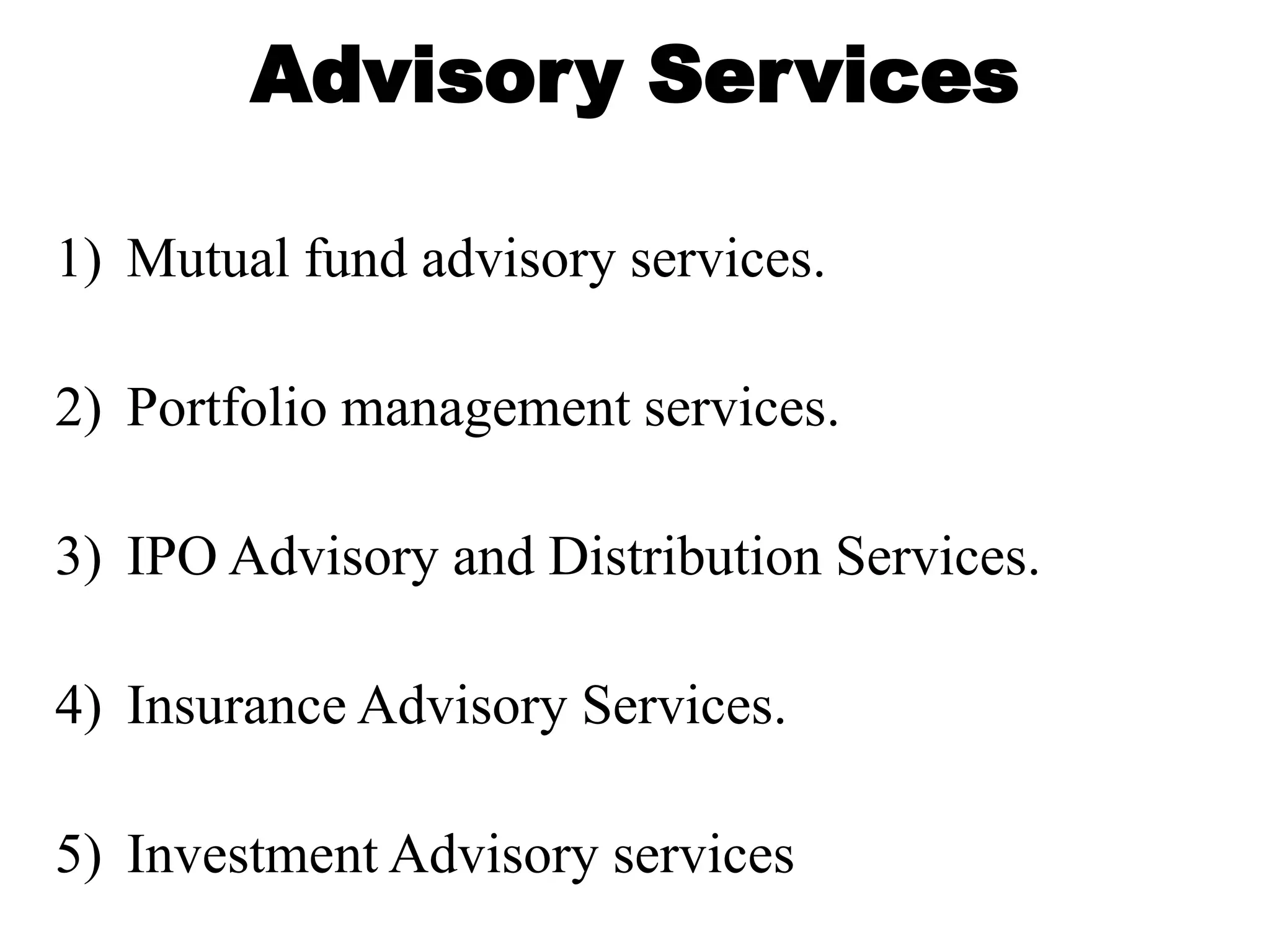
Advisory Services.
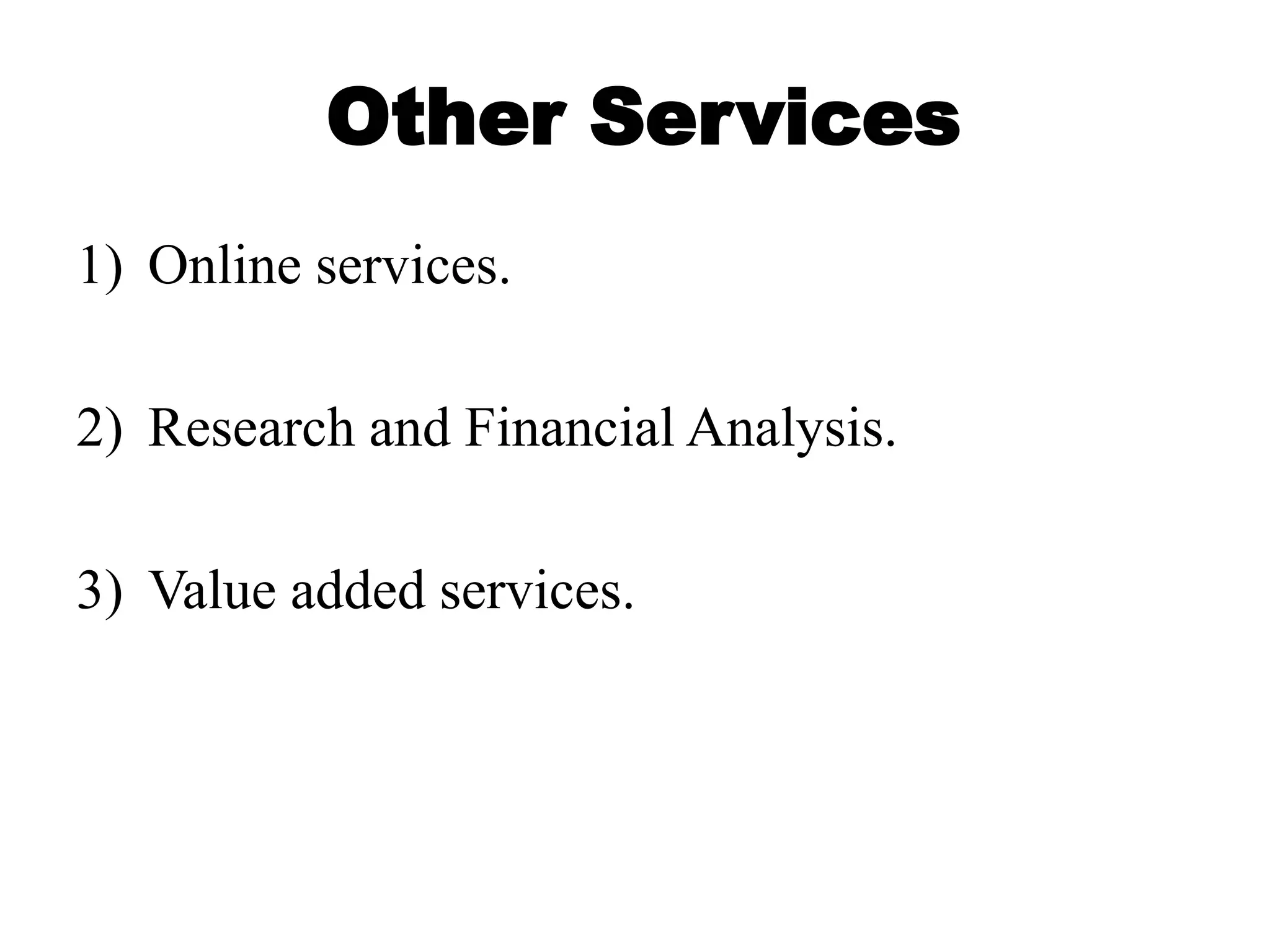
Other services.Online Trading Product of IL&FS InvestsmartBasically IL&FS Investsmart offers three types of products to its retail customers. Smart Start
Smart Invest
Smart TradeAdvisory ServicesMutual fund advisory services.Portfolio management services.IPO Advisory and Distribution Services.Insurance Advisory Services.Investment Advisory services
Other ServicesOnline services.Research and Financial Analysis.Value added services.
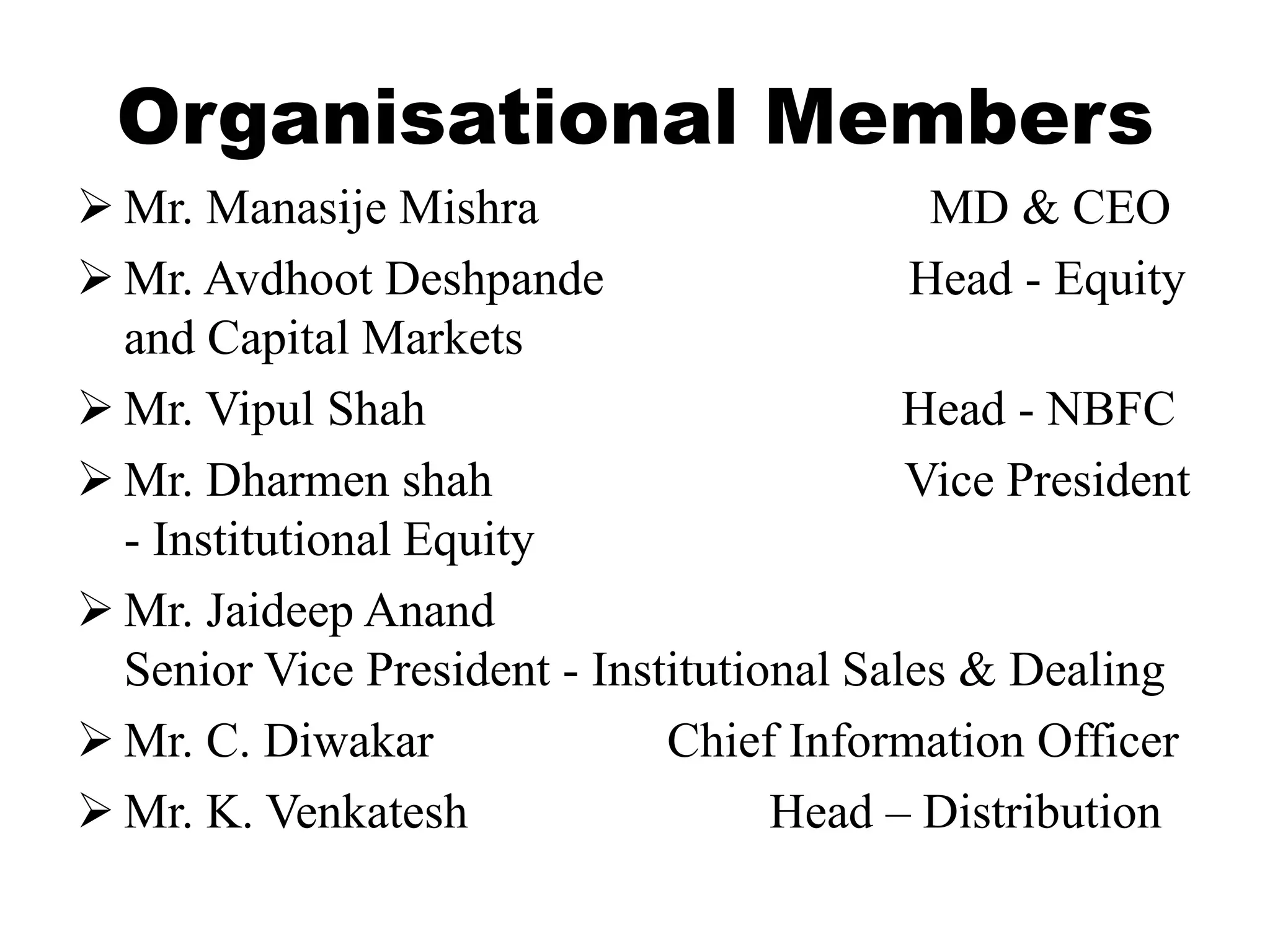
Organisational MembersMr. ManasijeMishra	                            MD & CEO
Mr. AvdhootDeshpande	                Head - Equity   and Capital Markets
Mr. Vipul Shah	                                    Head - NBFC
Mr. Dharmen shah	                          Vice President - Institutional Equity
Mr. JaideepAnand	                                       Senior Vice President - Institutional Sales & Dealing
Mr. C. Diwakar	                 Chief Information Officer
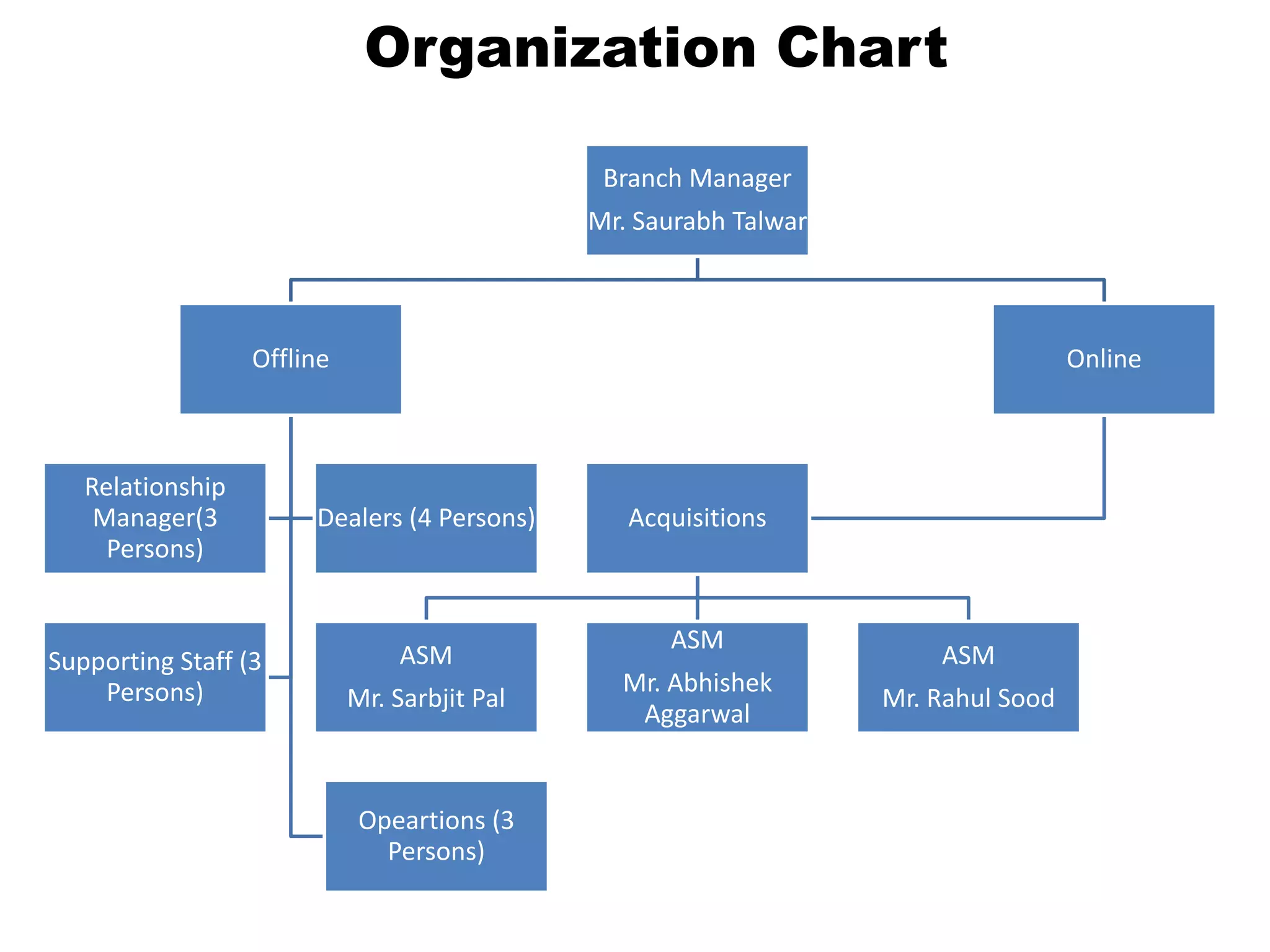
Mr. K. Venkatesh	               Head – DistributionOrganization Chart
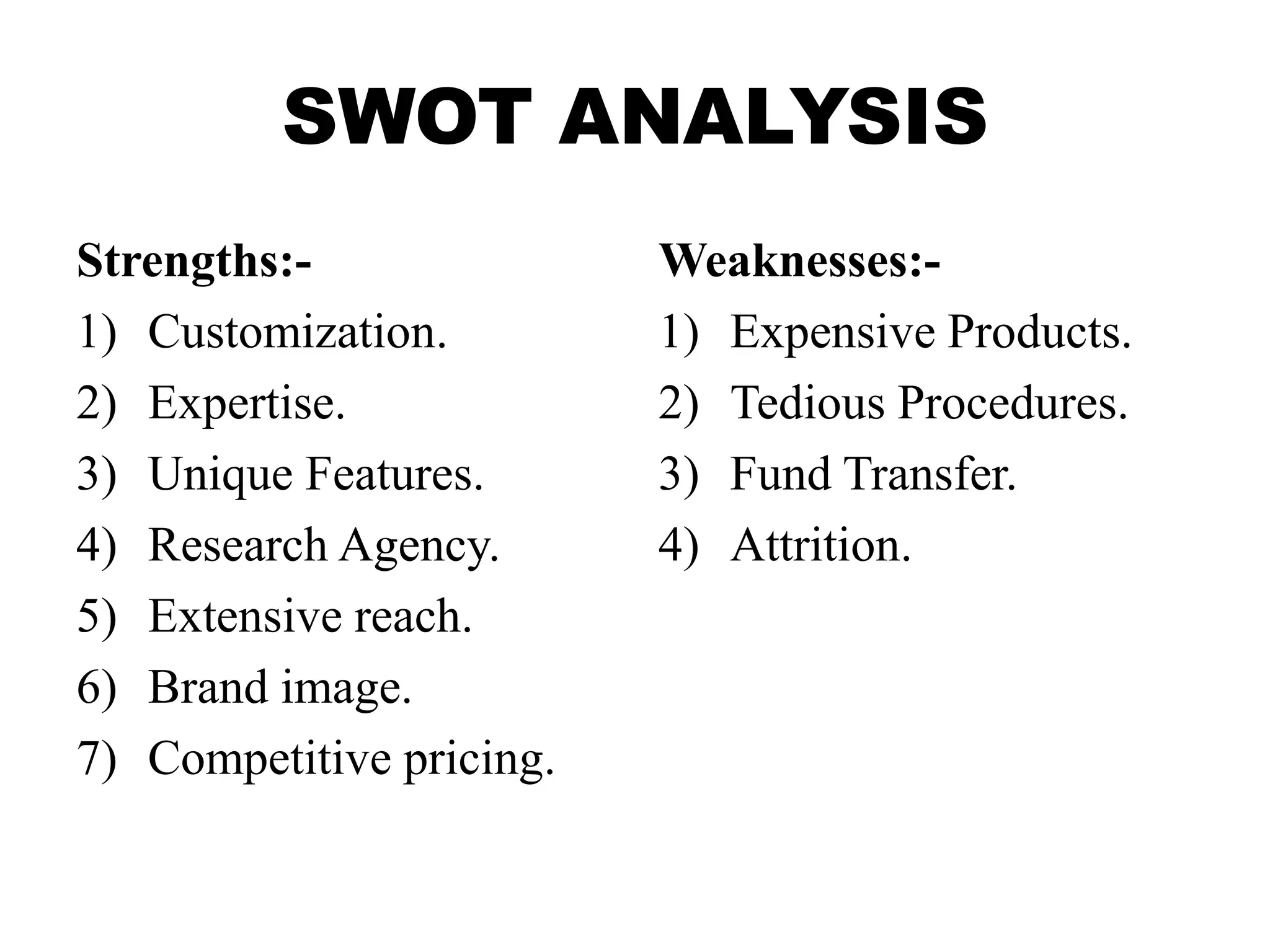
SWOT ANALYSISStrengths:-Customization.Expertise.Unique Features.Research Agency.Extensive reach.Brand image.Competitive pricing.Weaknesses:-Expensive Products.Tedious Procedures.Fund Transfer.Attrition.
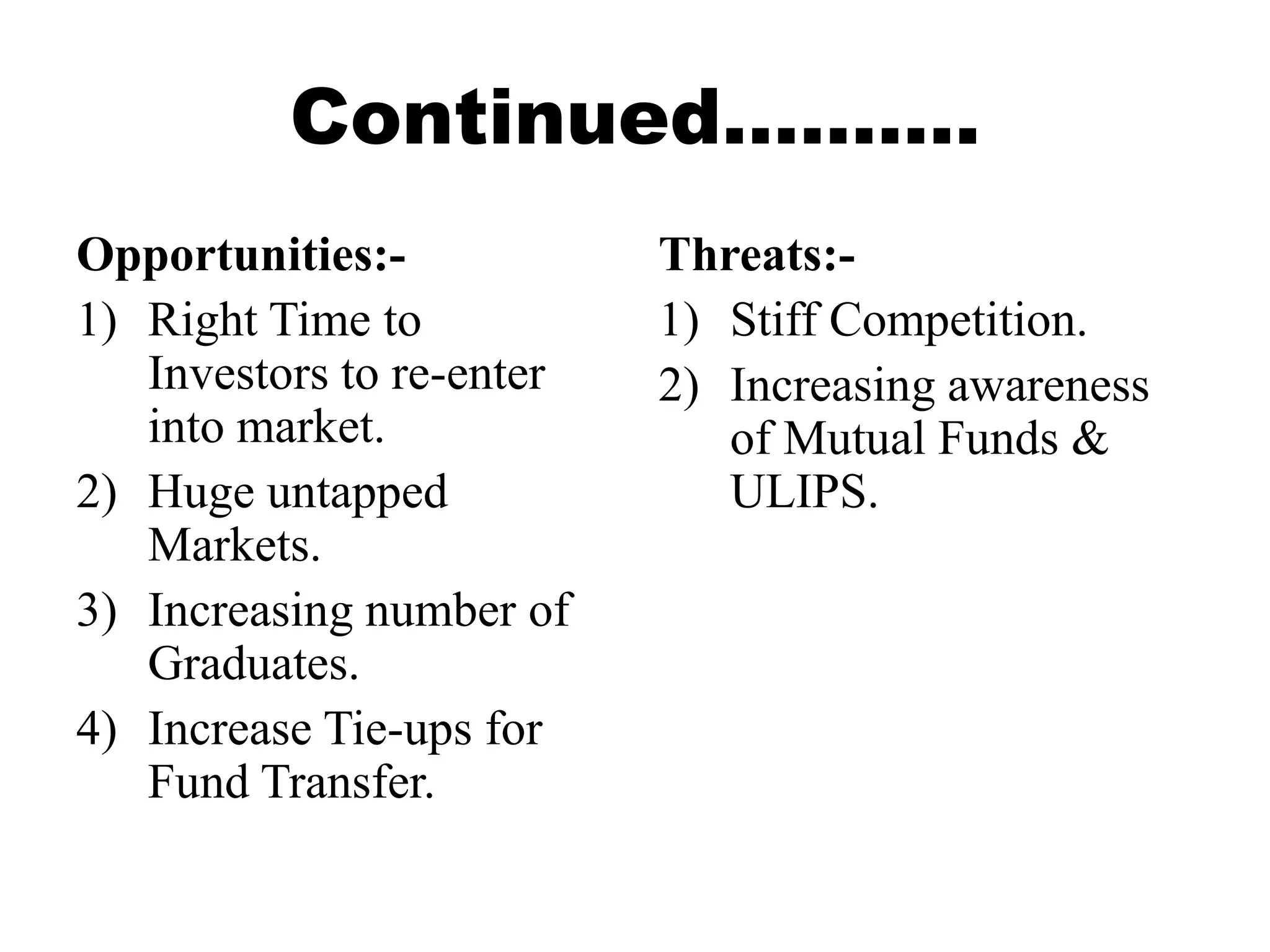
Continued……….Opportunities:-Right Time to Investors to re-enter into market.Huge untapped Markets.Increasing number of Graduates.Increase Tie-ups for Fund Transfer.Threats:-Stiff Competition.Increasing awareness of Mutual Funds & ULIPS.
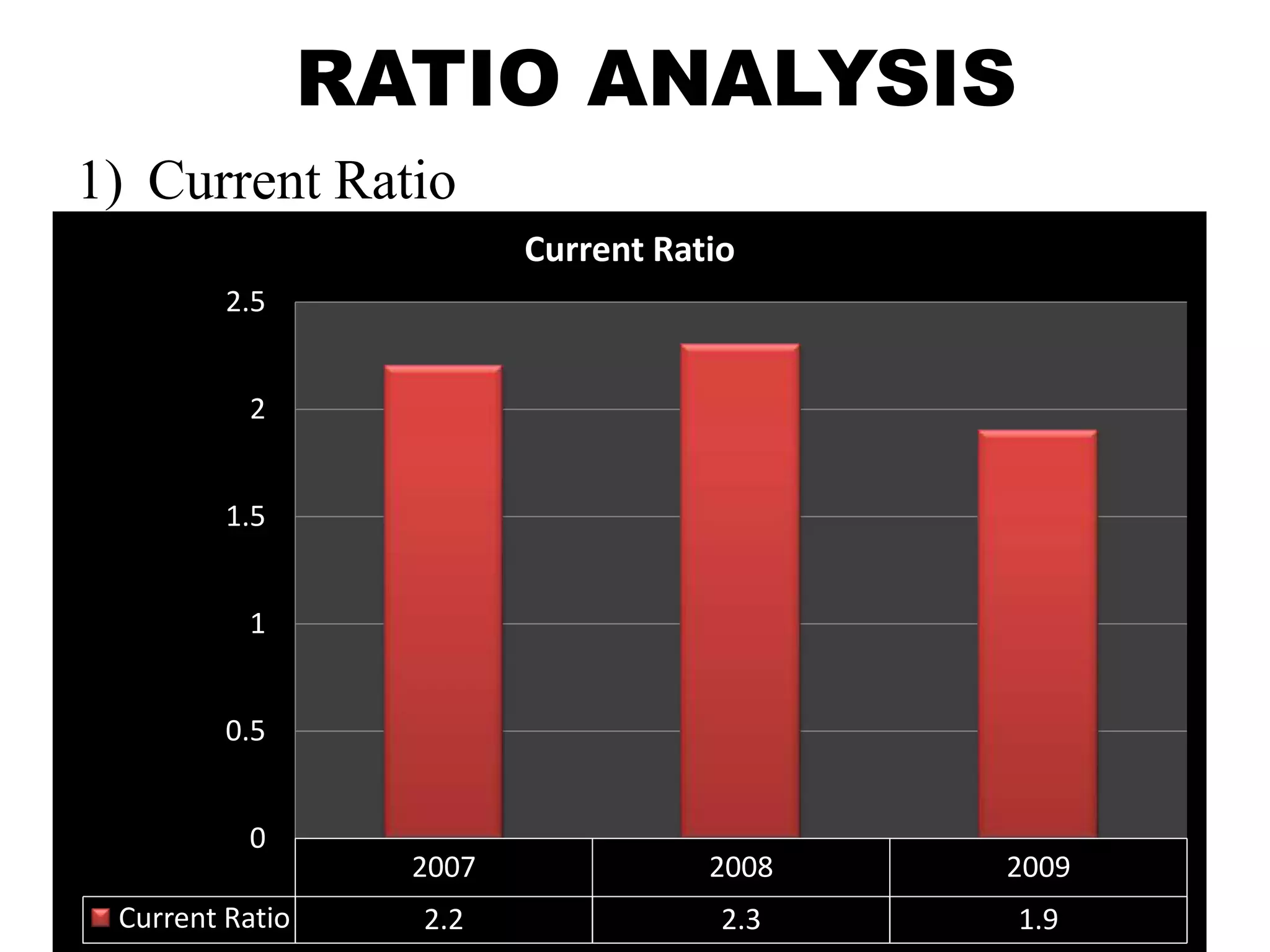
RATIO ANALYSISCurrent Ratio
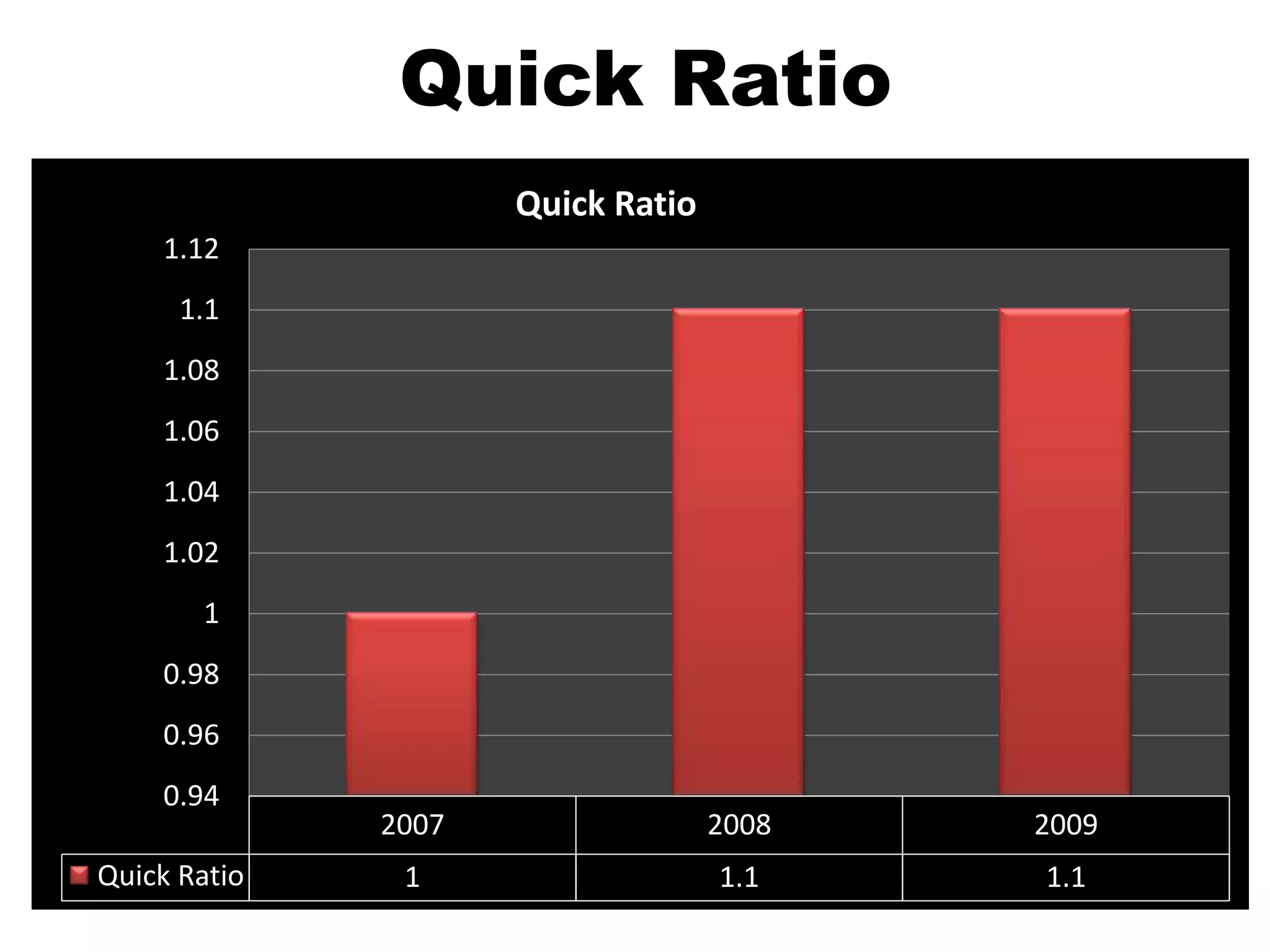
Quick Ratio
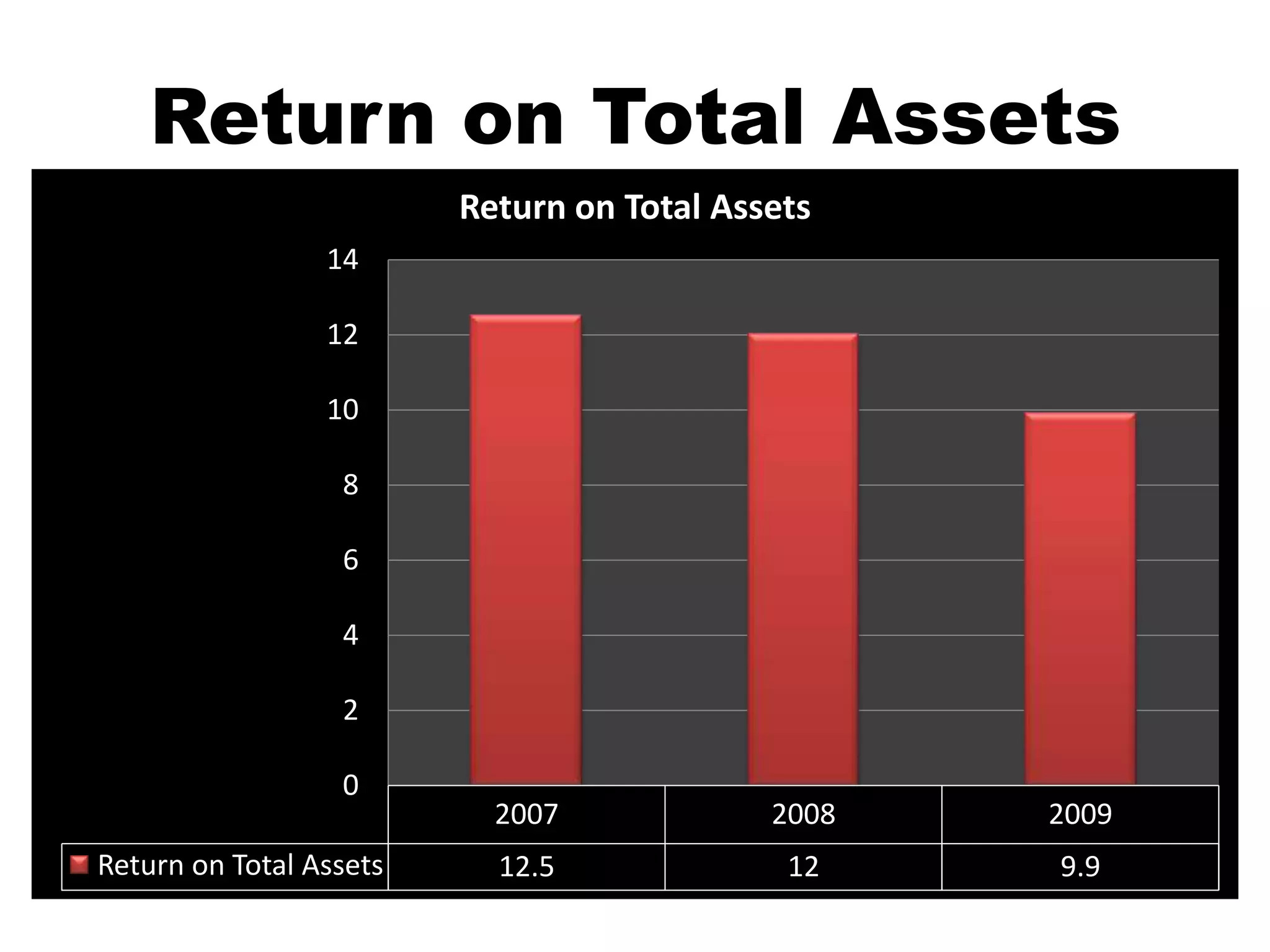
Return on Total Assets
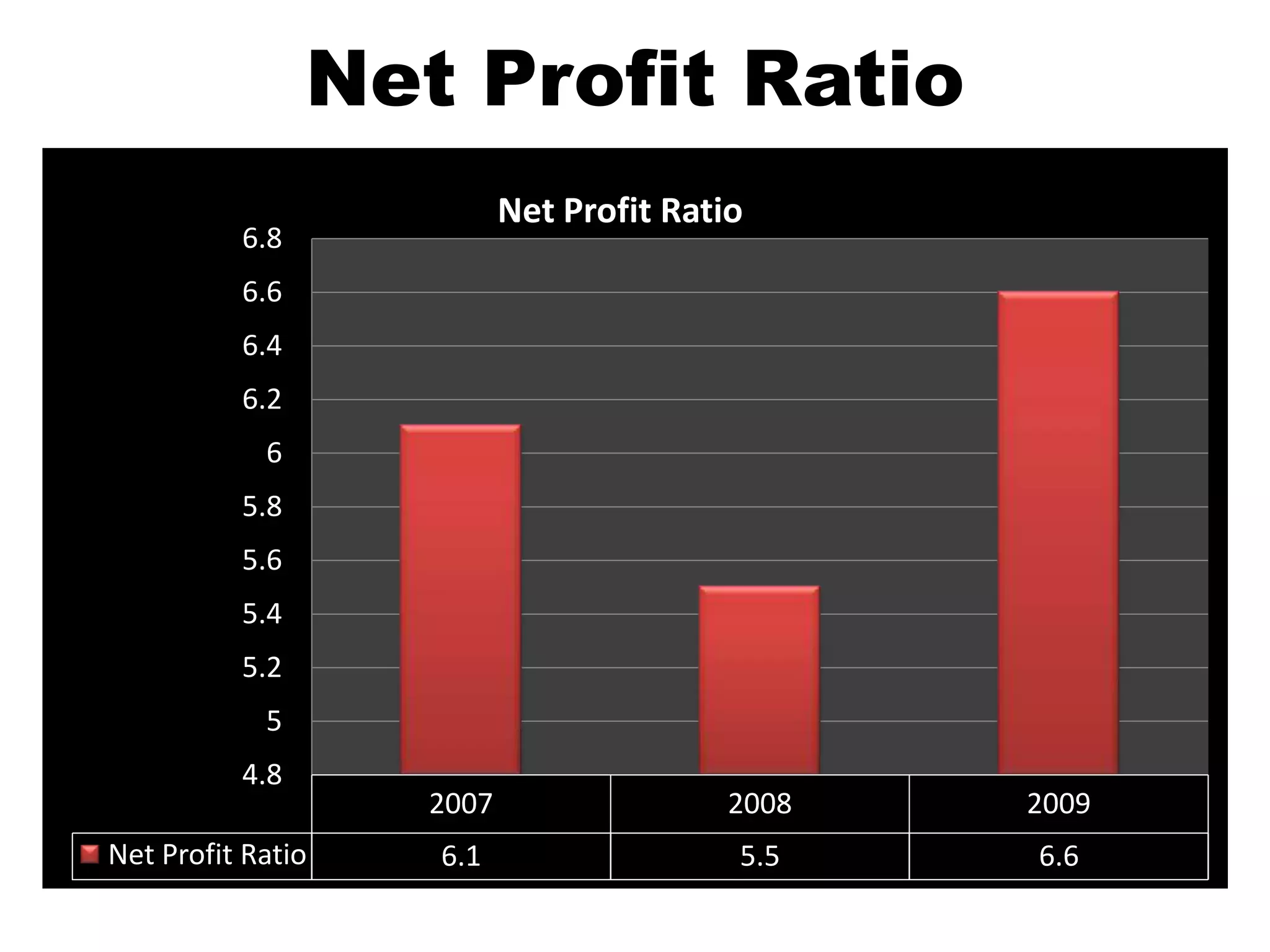
Net Profit Ratio
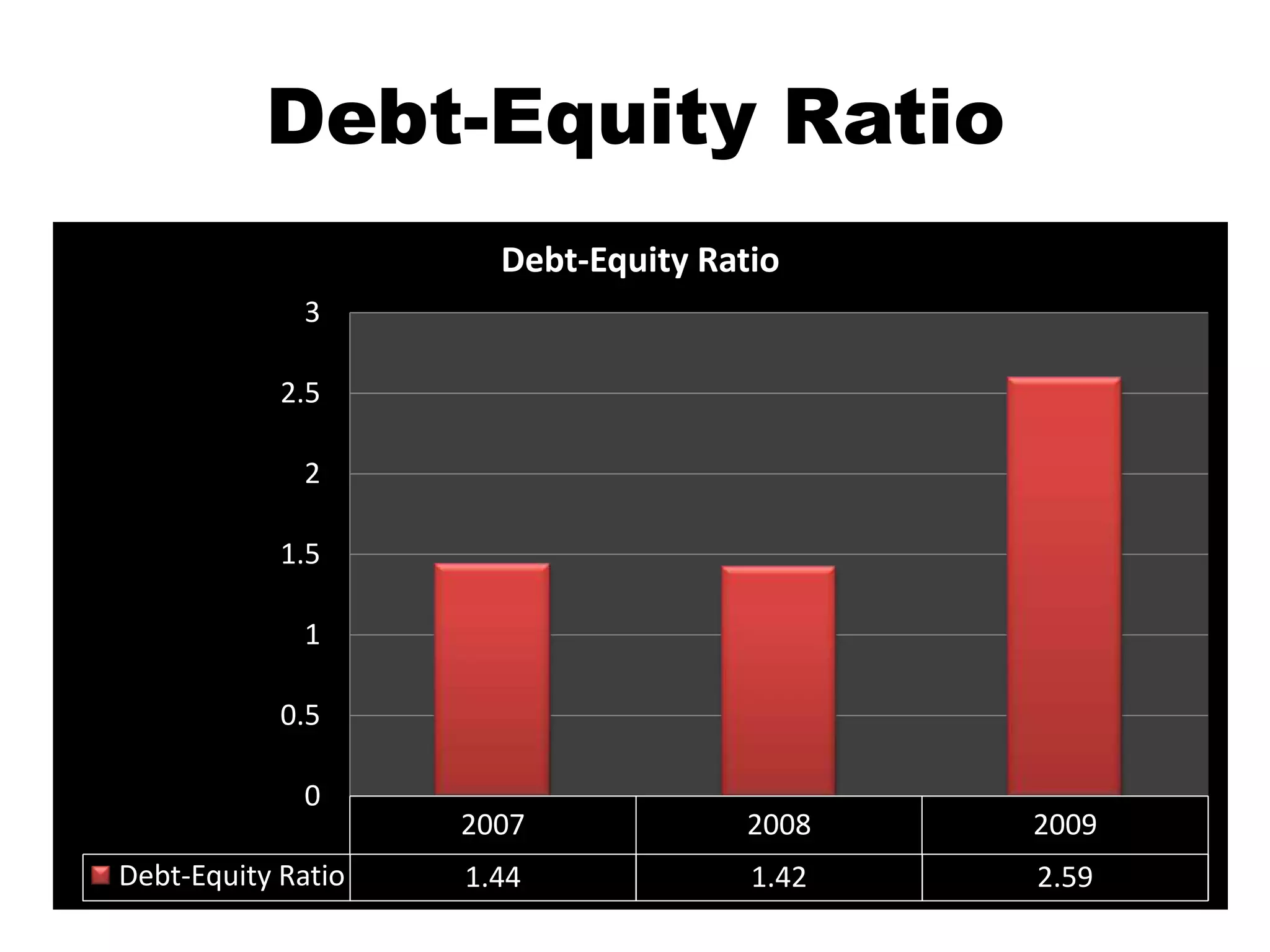
Debt-Equity Ratio
 Investment PortfolioInvestment is a commitment of funds made in the expectation of some positive rate of return.The Investment needs of an Investor:-Capital Preservation.Wealth Generation.Tax Savings.Income.Future Uncertainty.Retirement Planning.
Investment PlanningIt helps in deciding upon the right Investment strategy.It is a balance of three components:-Liquidity.Risk Tolerance.Return.
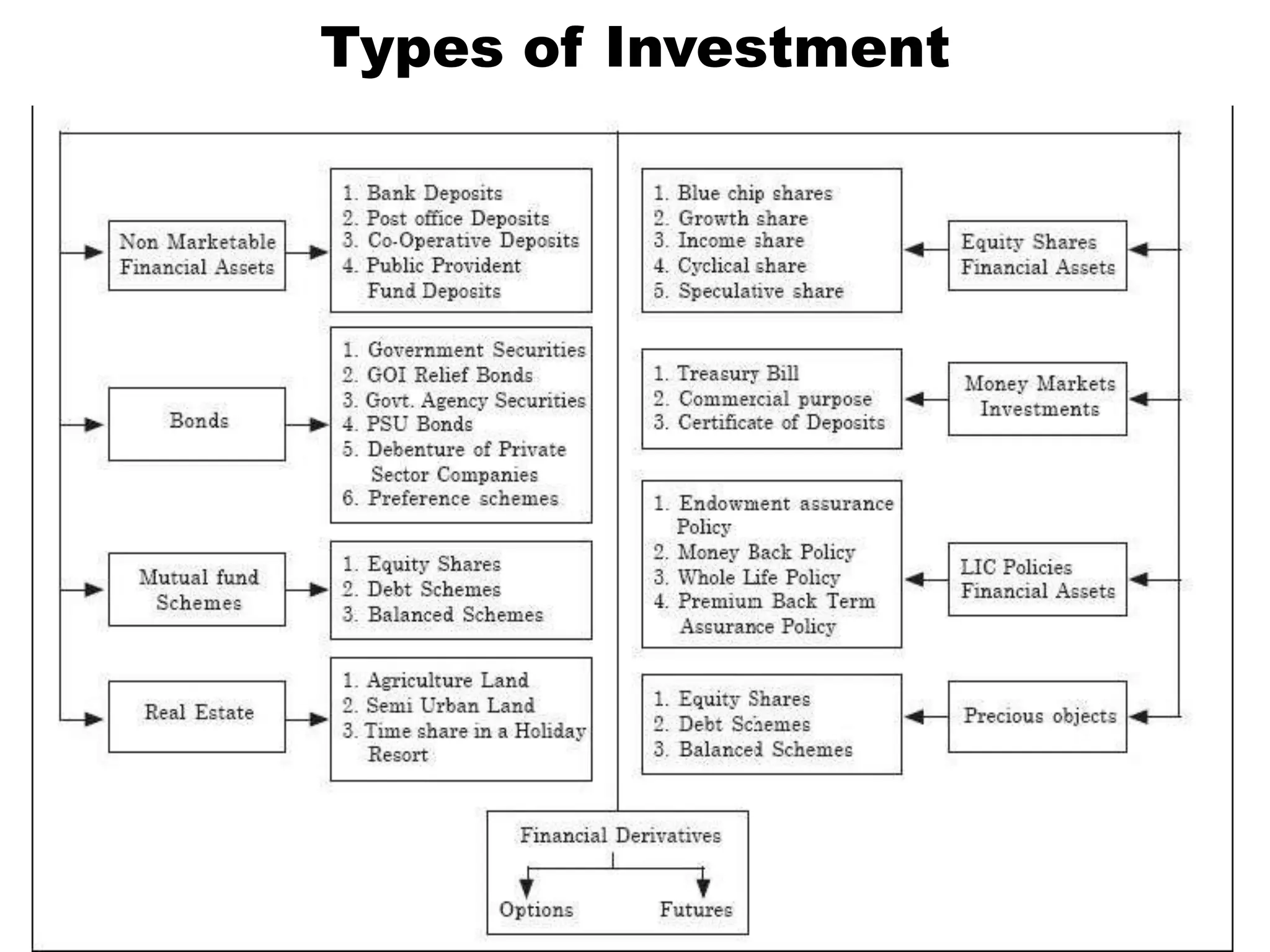
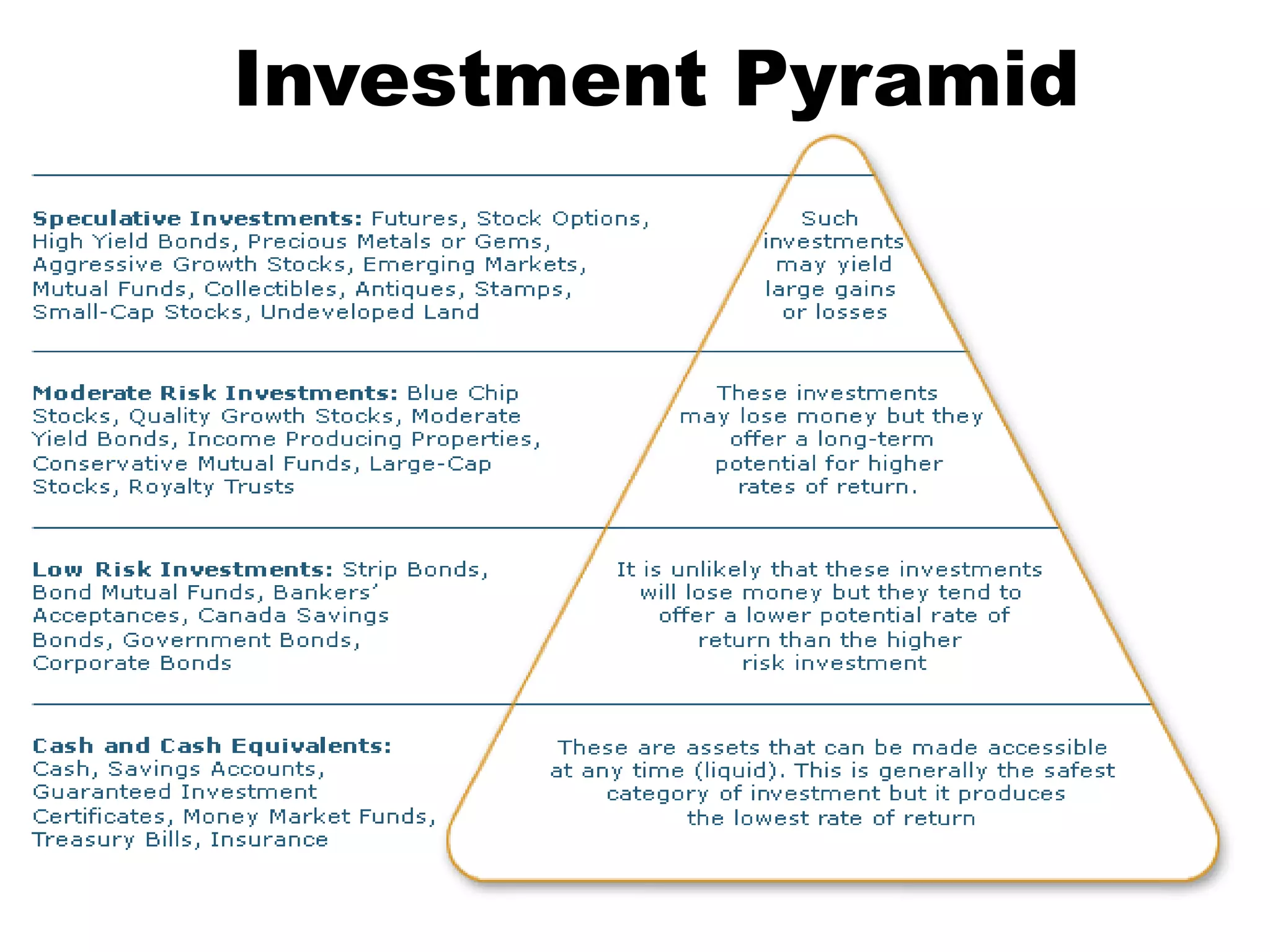
Types of Investment
Portfolio ManagementA Portfolio is a collection of securities that are grouped together to diversify the total Risk.
An Optimal Portfolio provides the highest possible utility, given the constraints imposed by the opportunity set and efficiency frontier.
Beta measures the risk associated with Individual Portfolio in relation to the Market Portfolio.Meaning of Portfolio ManagementThe Art & Science of making decisions about Investment mix & policy, matching Investments to Objectives, asset allocation for Individuals & balancing risk vs. Performance.Portfolio Objectives:-Stability of Principal.Income.Growth of Income.Capital Appreciation.
Investment Pyramid
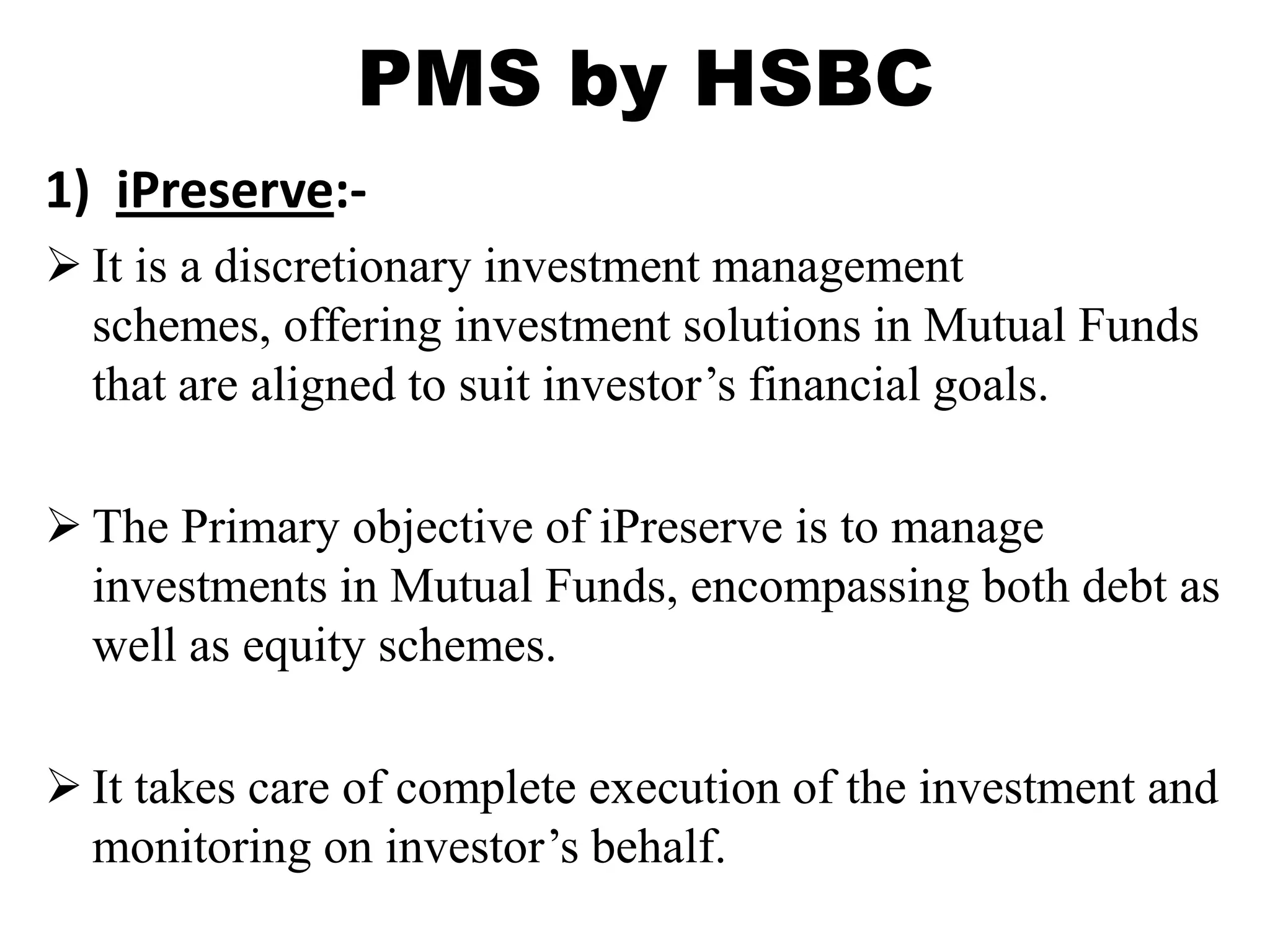
PMS by HSBCiPreserve:-It is a discretionary investment management schemes, offering investment solutions in Mutual Funds that are aligned to suit investor’s financial goals.
The Primary objective of iPreserve is to manage investments in Mutual Funds, encompassing both debt as well as equity schemes.
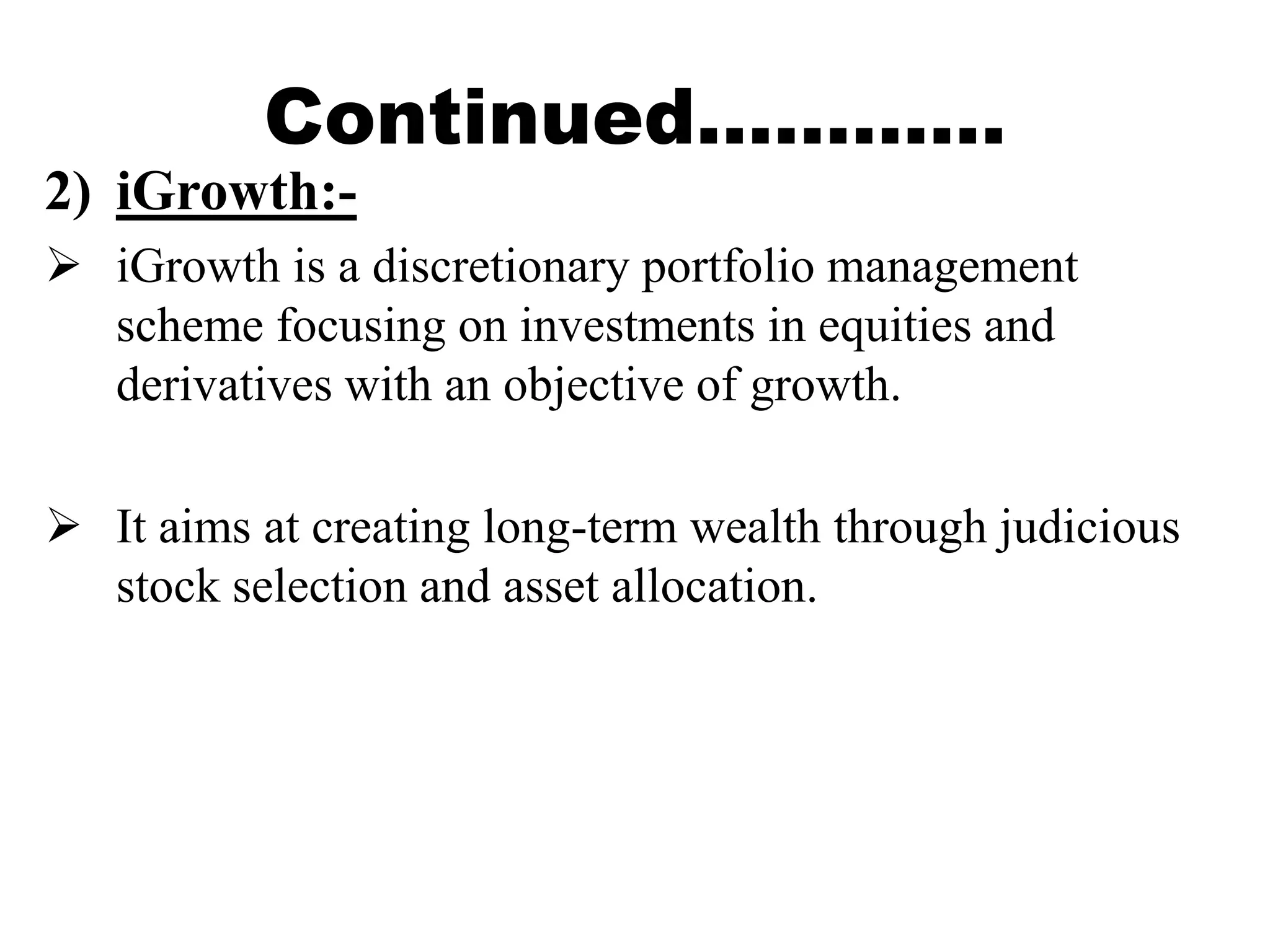
It takes care of complete execution of the investment and monitoring on investor’s behalf.Continued…………iGrowth:-iGrowth is a discretionary portfolio management scheme focusing on investments in equities and derivatives with an objective of growth.
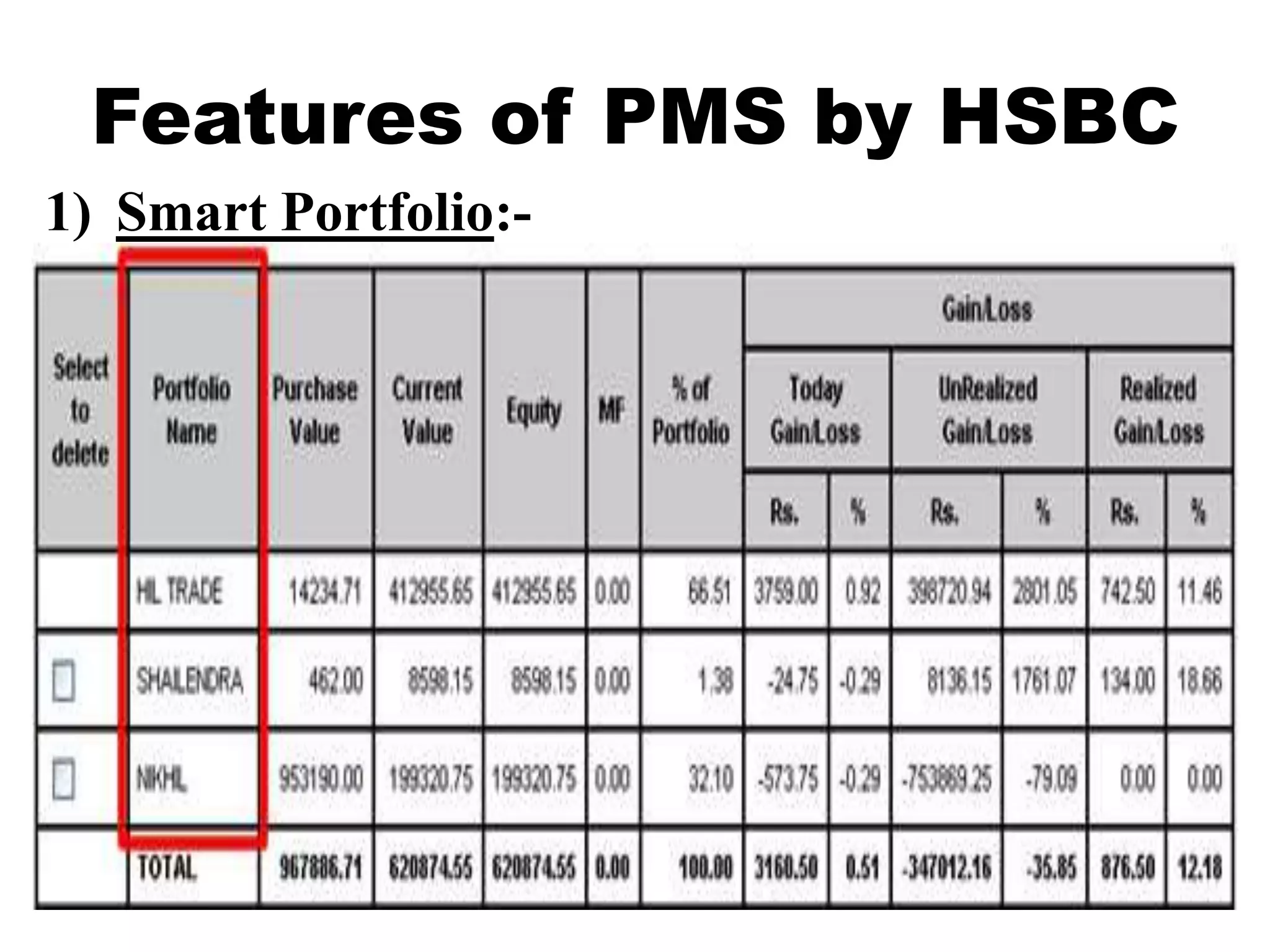
It aims at creating long-term wealth through judicious stock selection and asset allocation.Features of PMS by HSBCSmart Portfolio:-
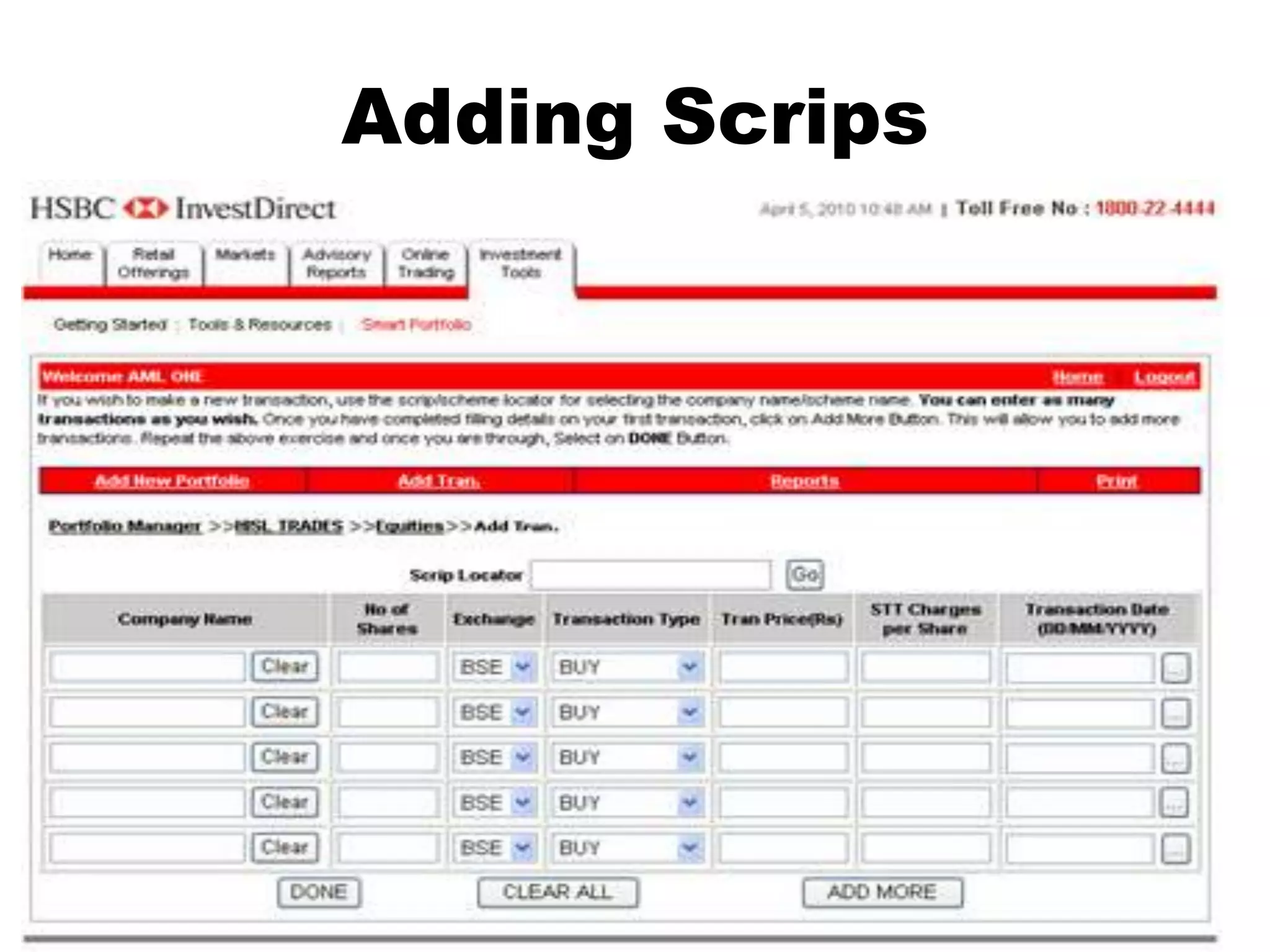
Adding Scrips
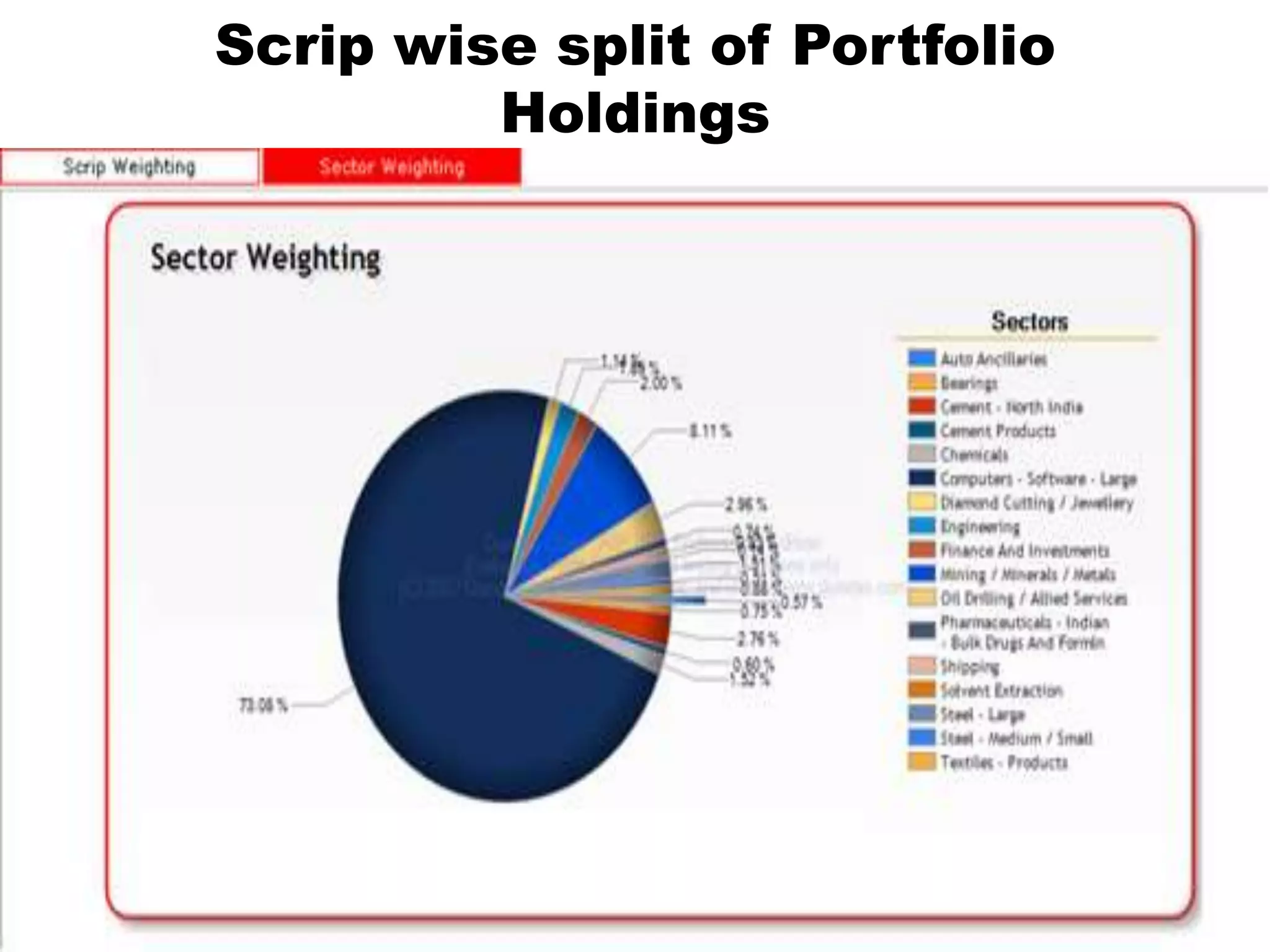
Scrip wise split of Portfolio Holdings
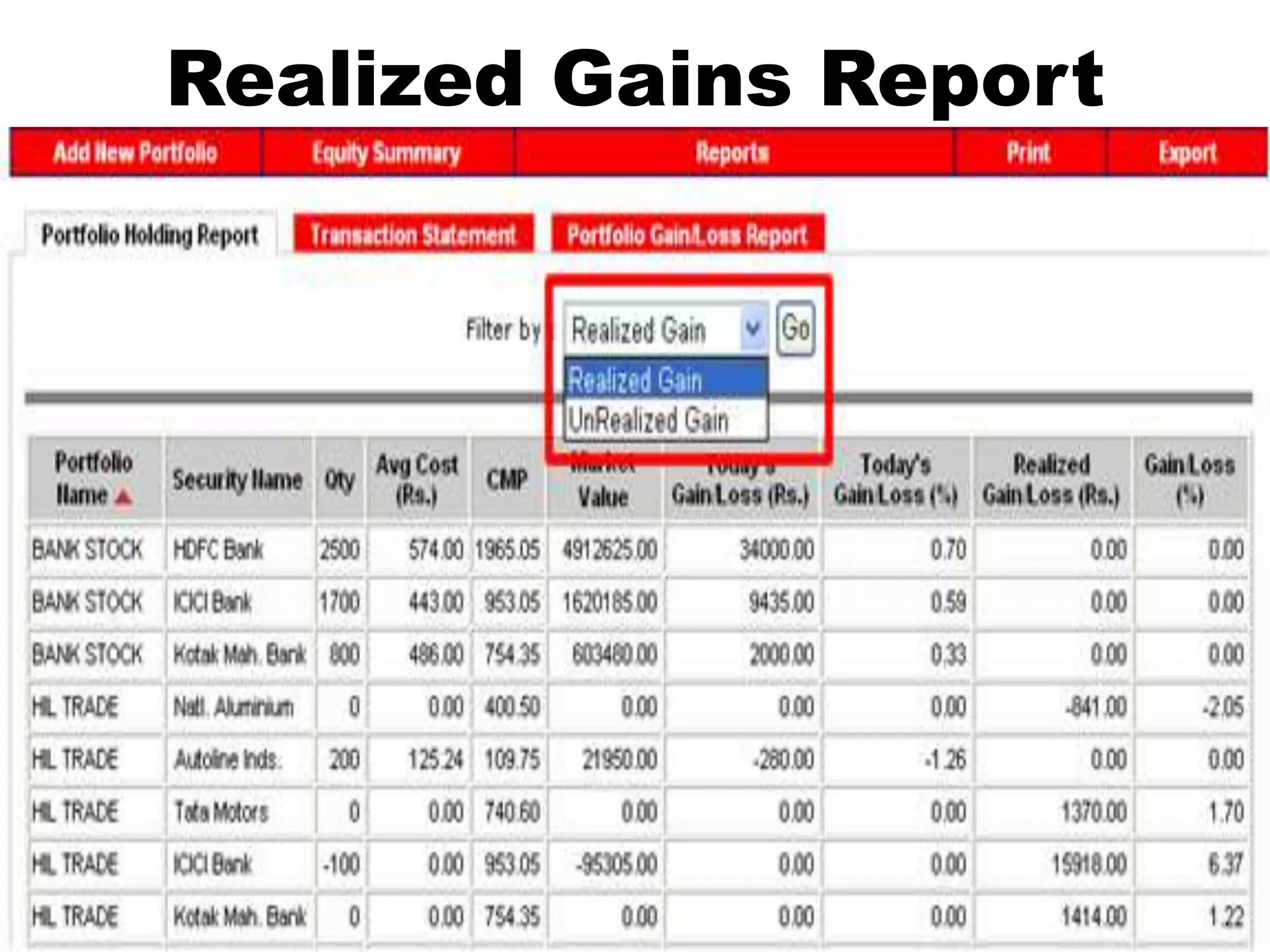
Realized Gains Report
TitleA Comparative Analysis on Investment Portfolio of Business & Service Class Investors of HSBC InvestDirect in Ludhiana.
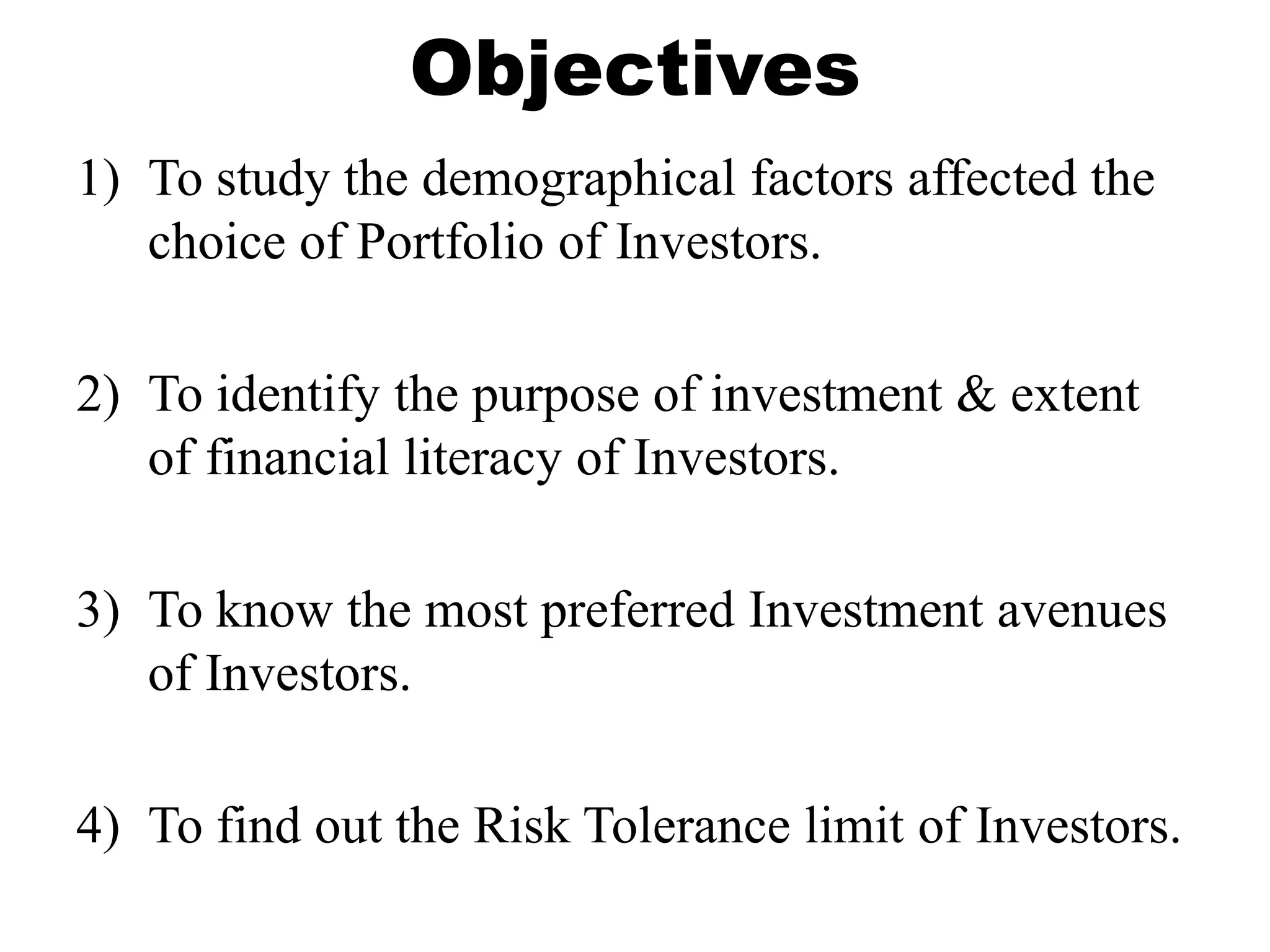
ObjectivesTo study the demographical factors affected the choice of Portfolio of Investors.To identify the purpose of investment & extent of financial literacy of Investors.To know the most preferred Investment avenues of Investors.To find out the Risk Tolerance limit of Investors.
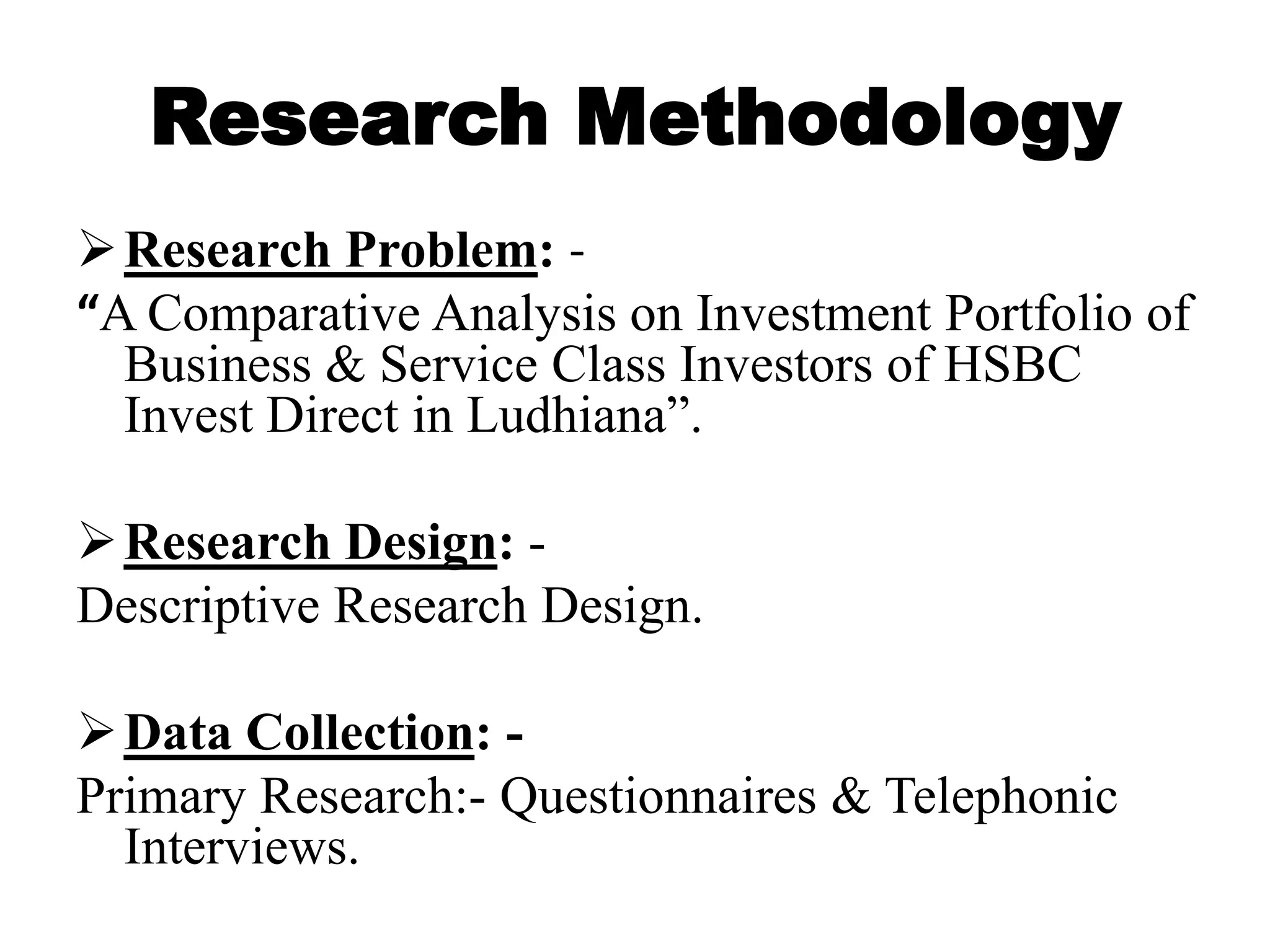
Research MethodologyResearch Problem: -“A Comparative Analysis on Investment Portfolio of Business & Service Class Investors of HSBC Invest Direct in Ludhiana”.Research Design: -Descriptive Research Design.Data Collection: -Primary Research:- Questionnaires & Telephonic Interviews.
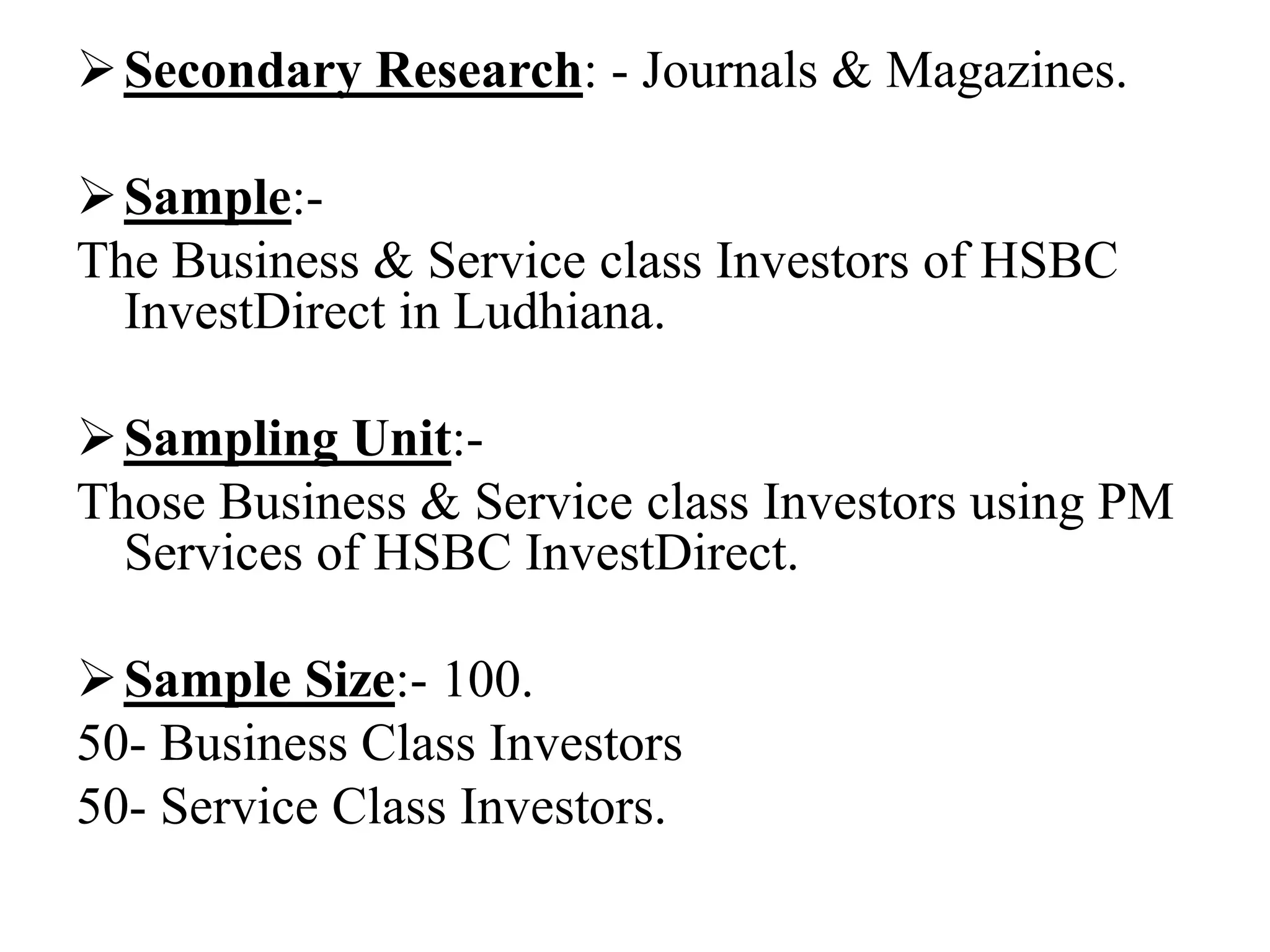
Secondary Research: - Journals & Magazines.
Sample:- The Business & Service class Investors of HSBC InvestDirect in Ludhiana.Sampling Unit:-Those Business & Service class Investors using PM Services of HSBC InvestDirect.Sample Size:- 100.50- Business Class Investors50- Service Class Investors.
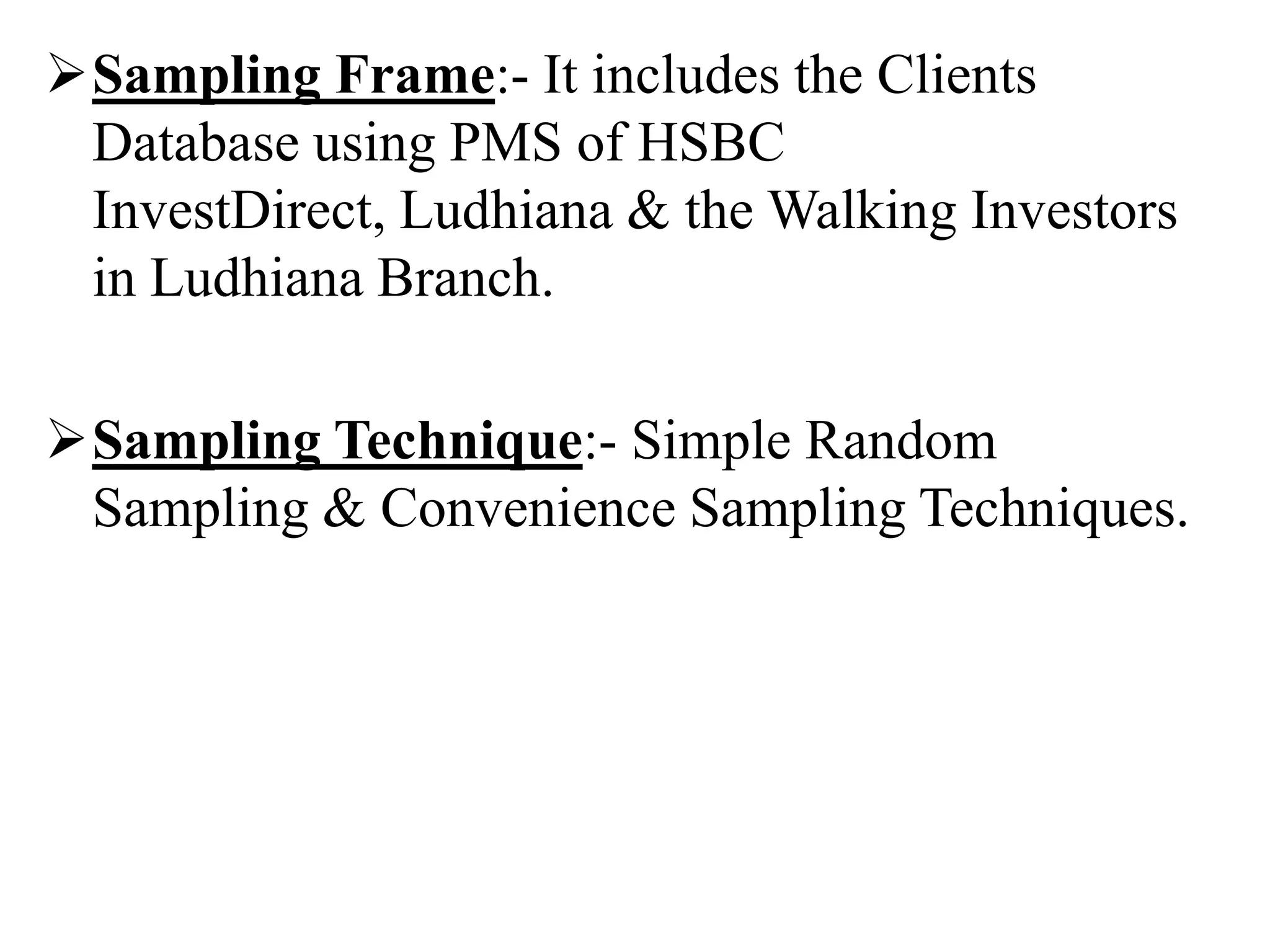
Sampling Frame:- It includes the Clients Database using PMS of HSBC InvestDirect, Ludhiana & the Walking Investors in Ludhiana Branch.
Sampling Technique:- Simple Random Sampling & Convenience Sampling Techniques.Data Analysis & Interpretation
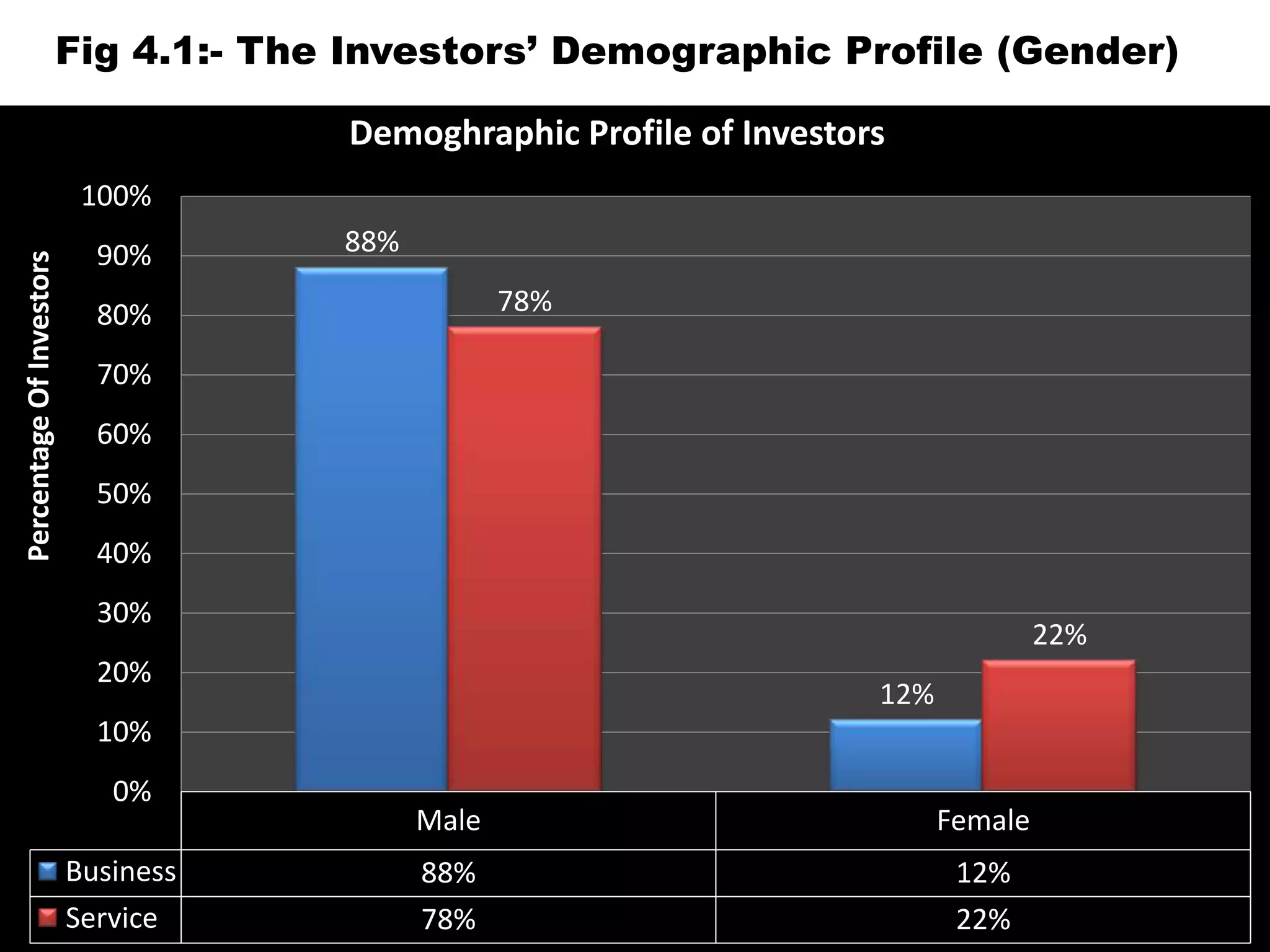
Fig 4.1:- The Investors’ Demographic Profile (Gender)
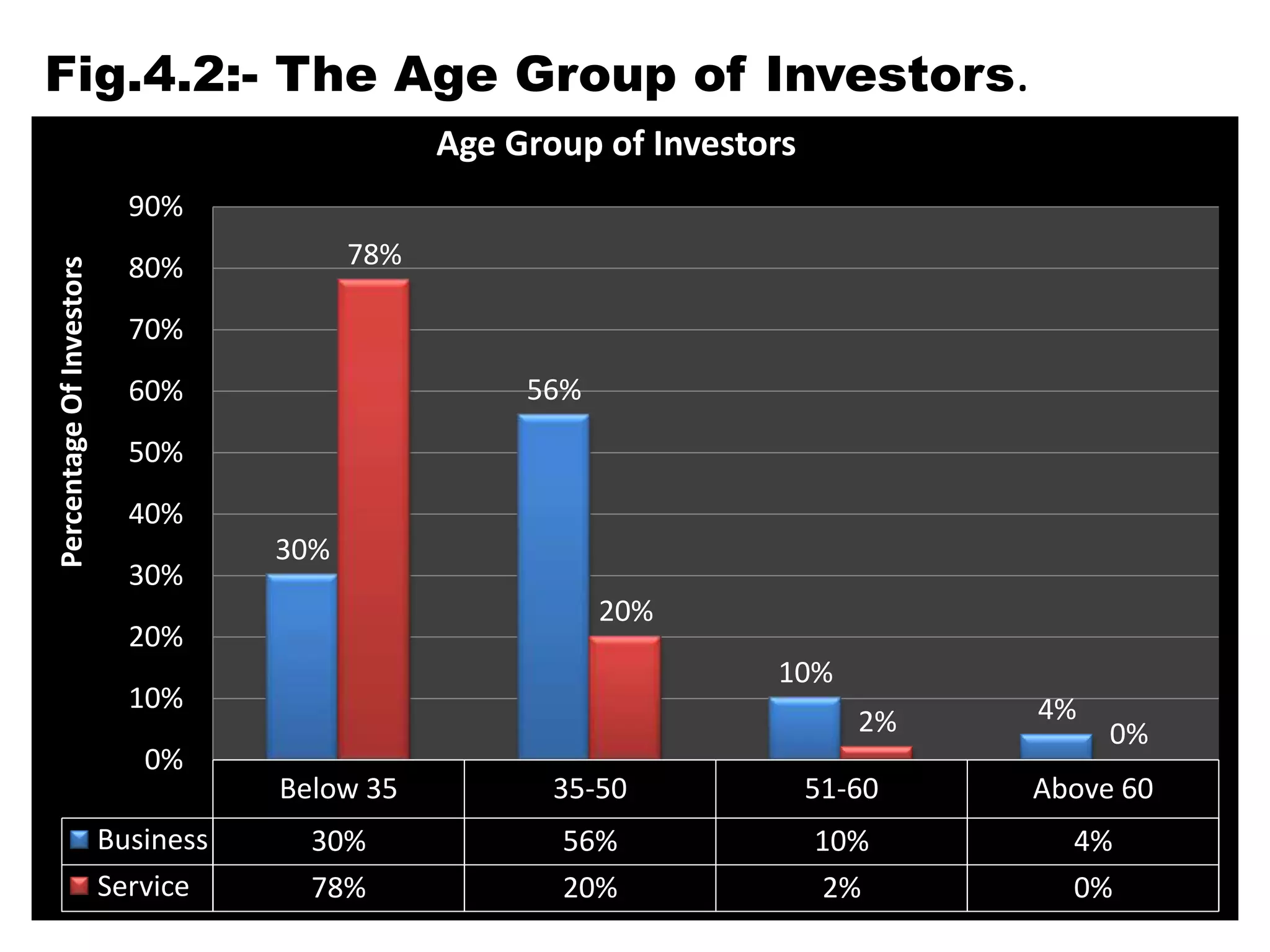
Fig.4.2:- The Age Group of Investors.
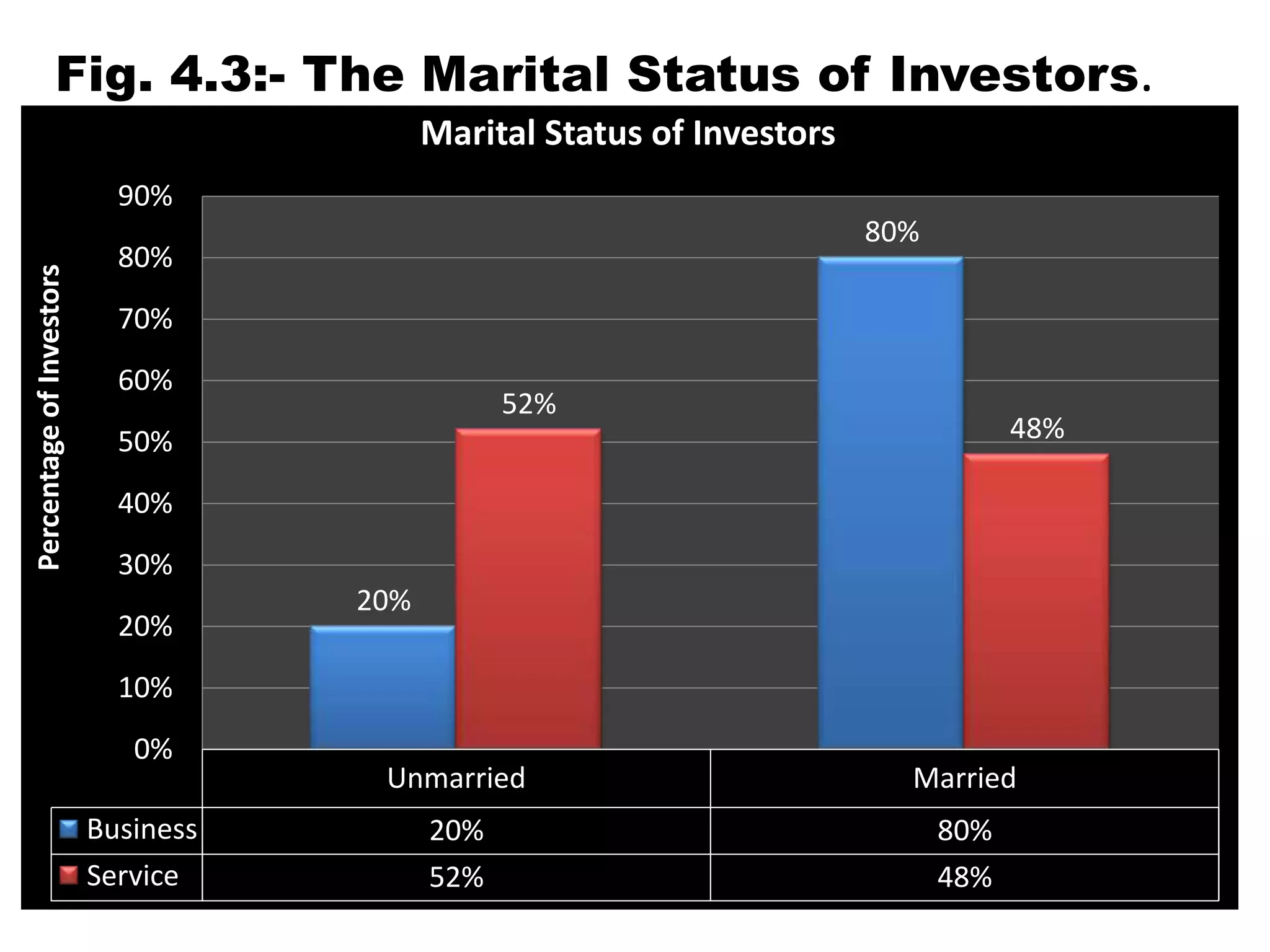
Fig. 4.3:- The Marital Status of Investors.
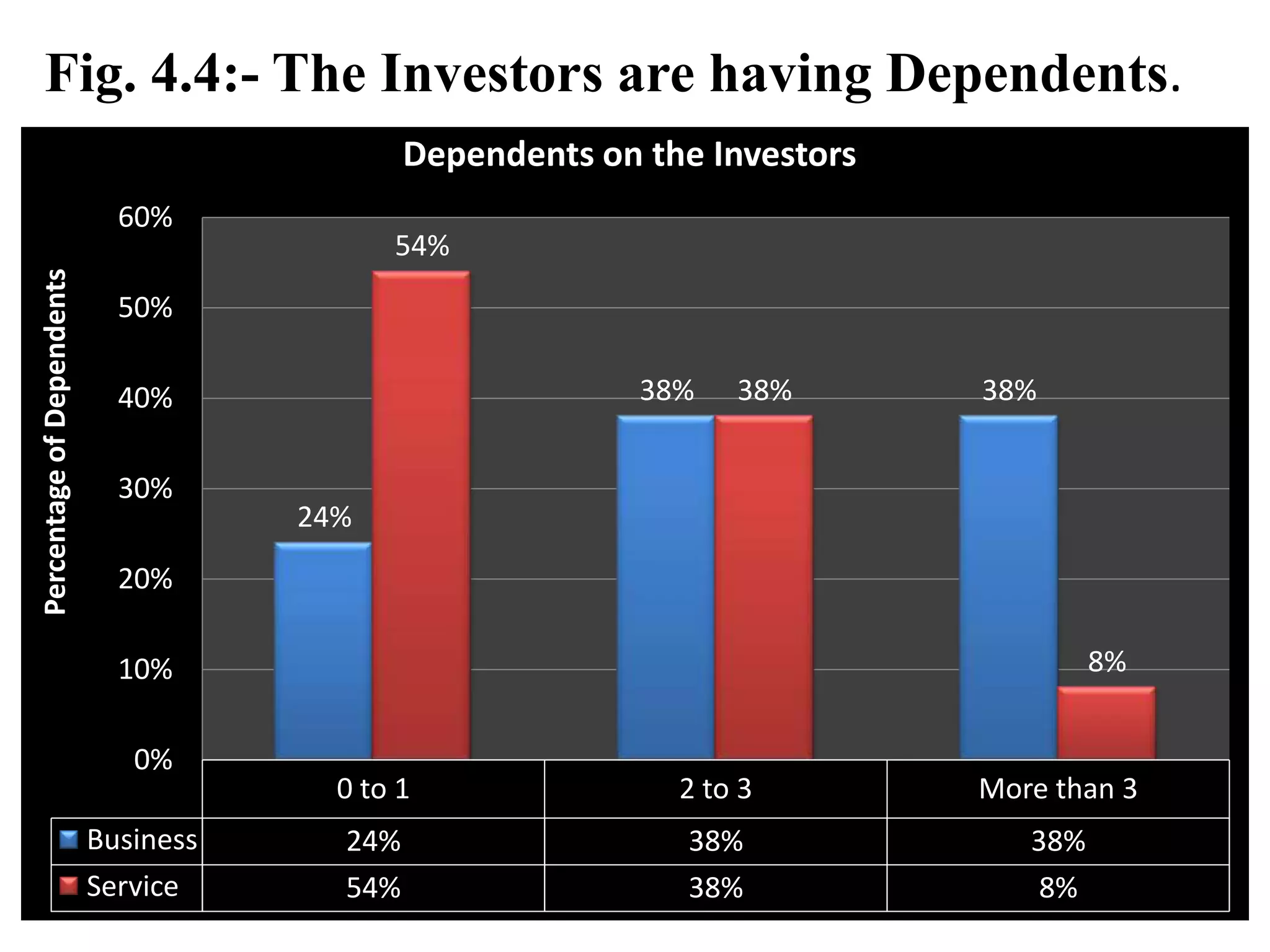
Fig. 4.4:- The Investors are having Dependents.
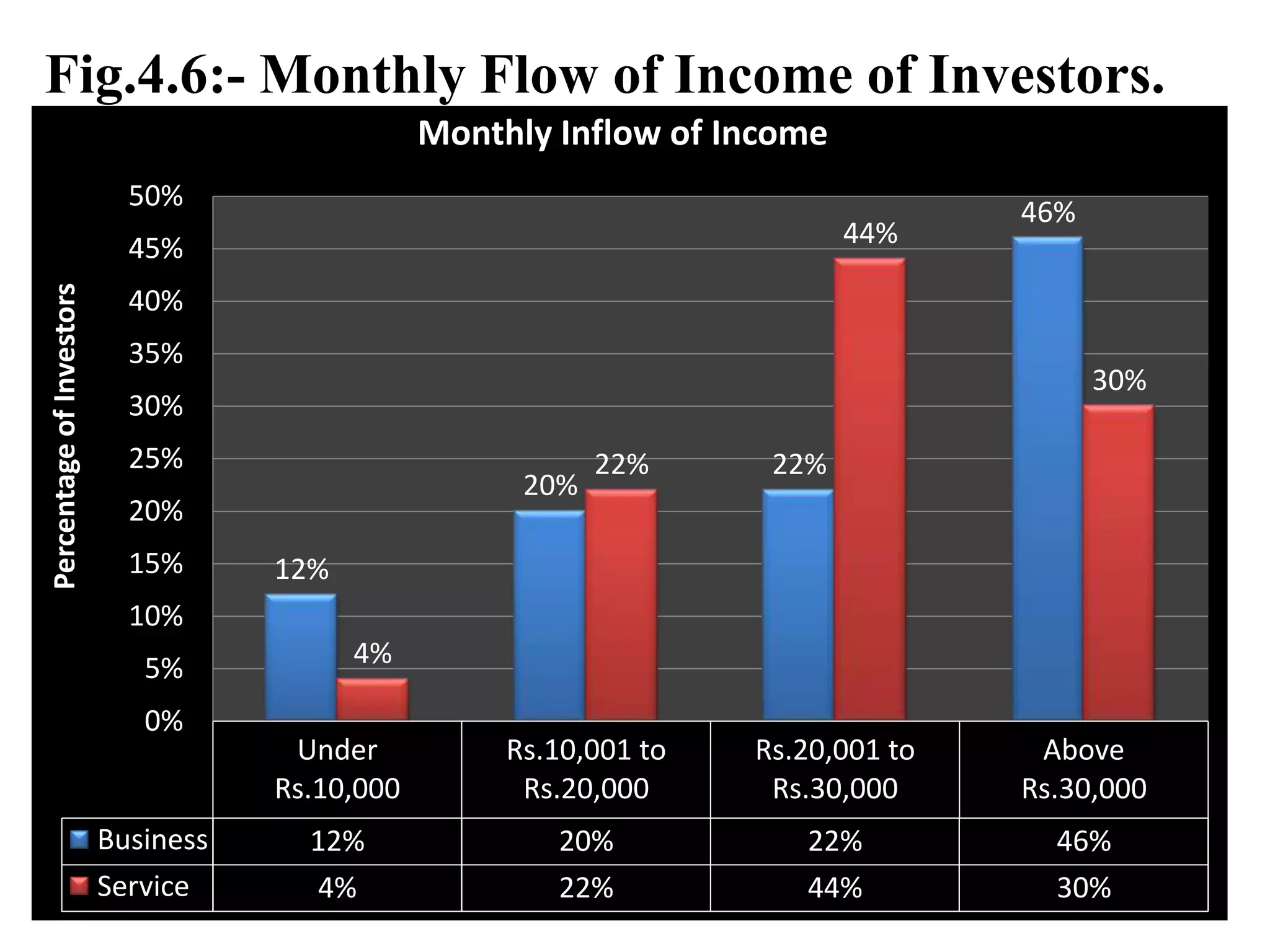
Fig.4.6:- Monthly Flow of Income of Investors.

Presentation of training project

  • 1.
    A Comparative Analysison Investment Portfolio of Business & Service Class Investors of HSBC InvestDirect in Ludhiana Presented by-SupriyaNayyar
  • 2.
    Historical background ofthe group It was established in 1865.
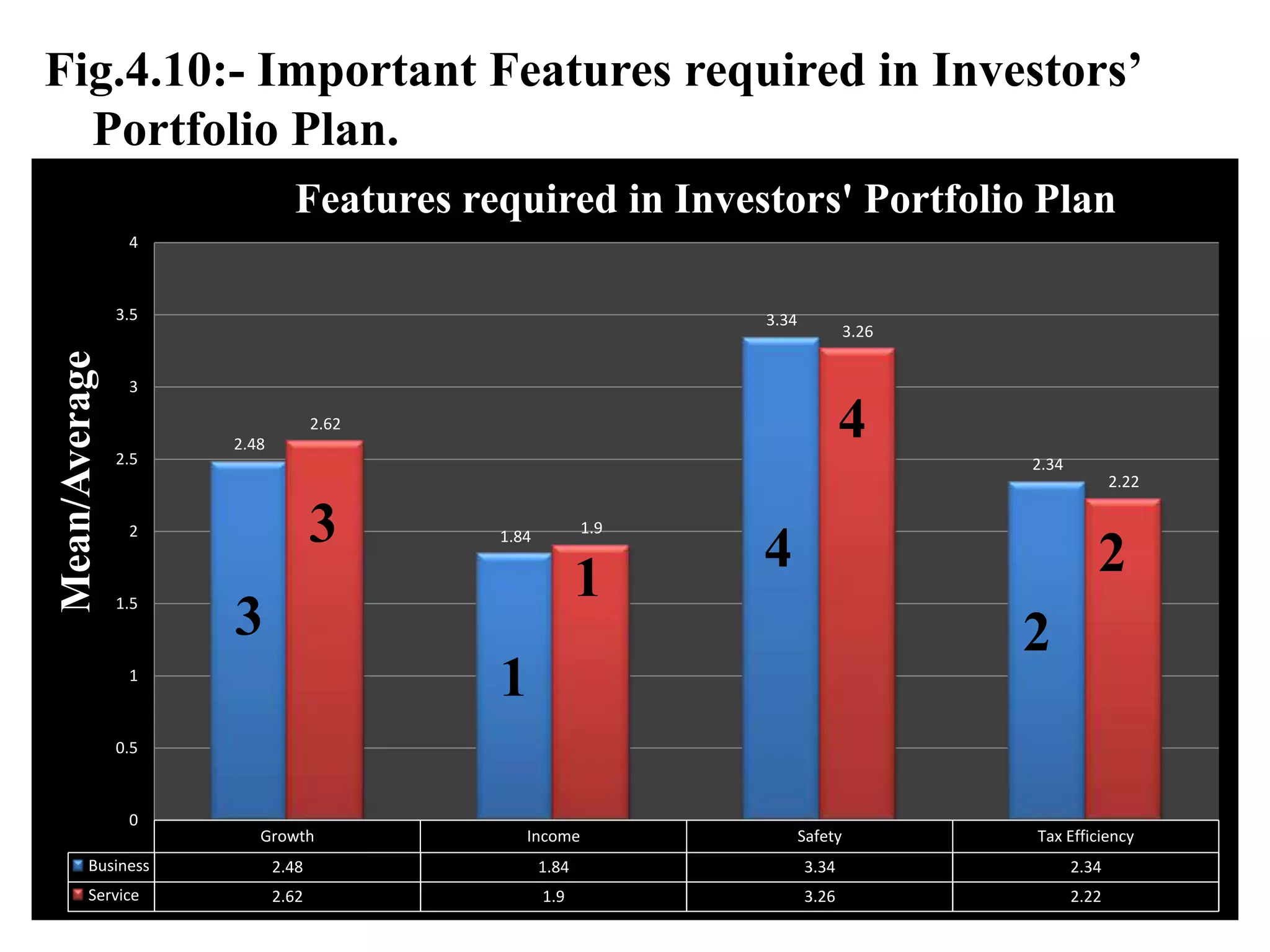
  • 3.
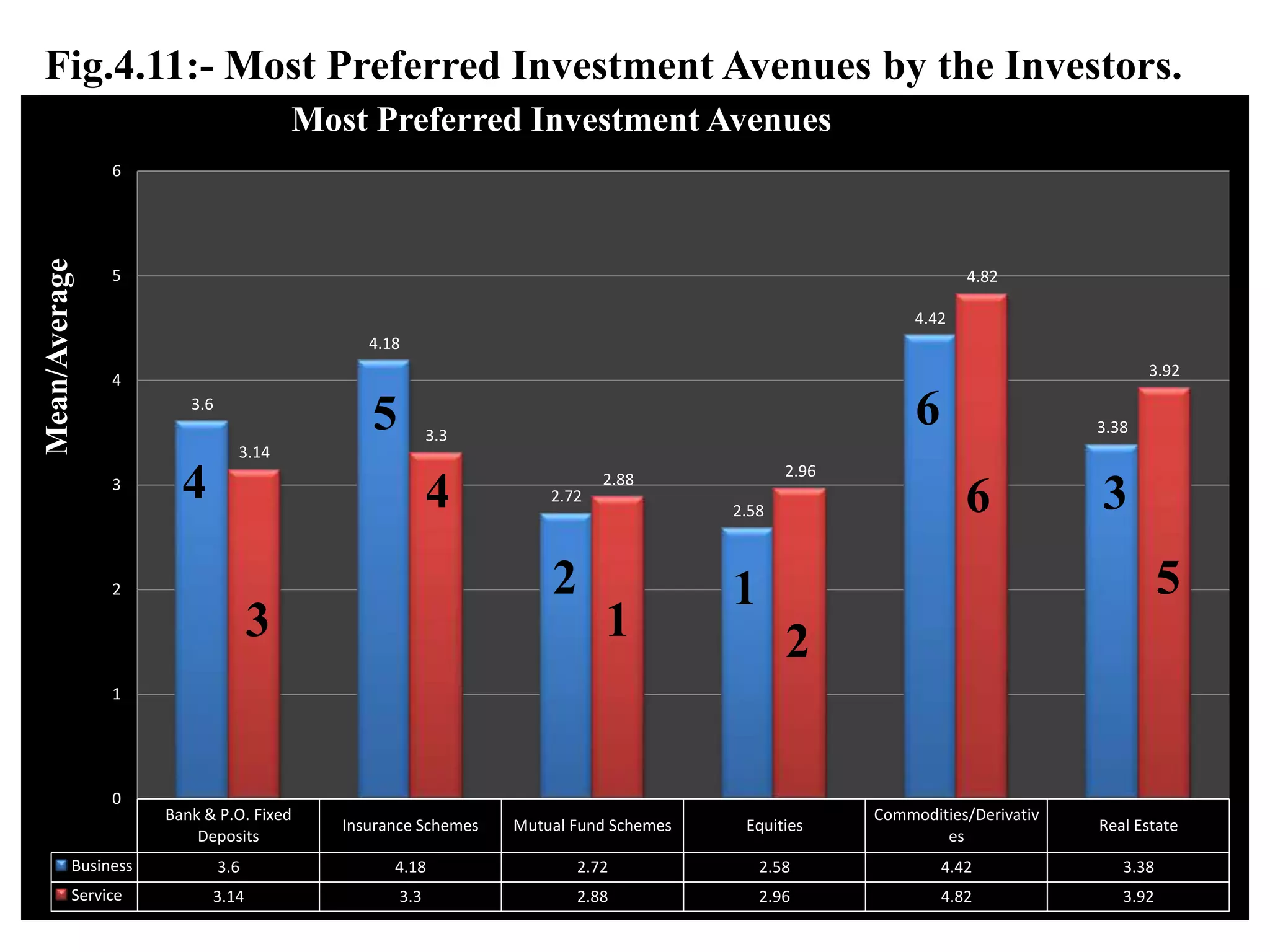
    Aimed to financethe growing trade between Europe, India & China.
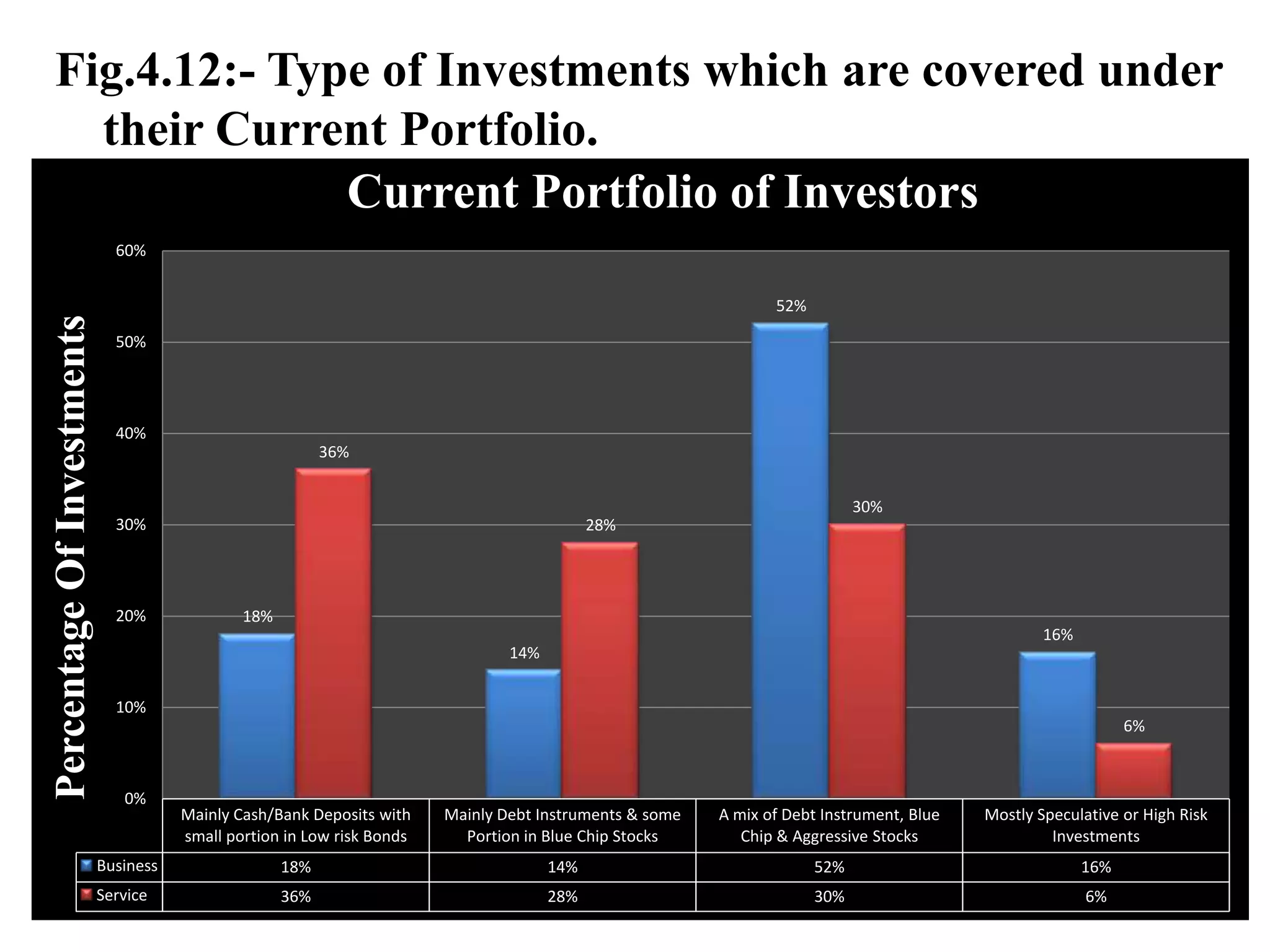
  • 4.
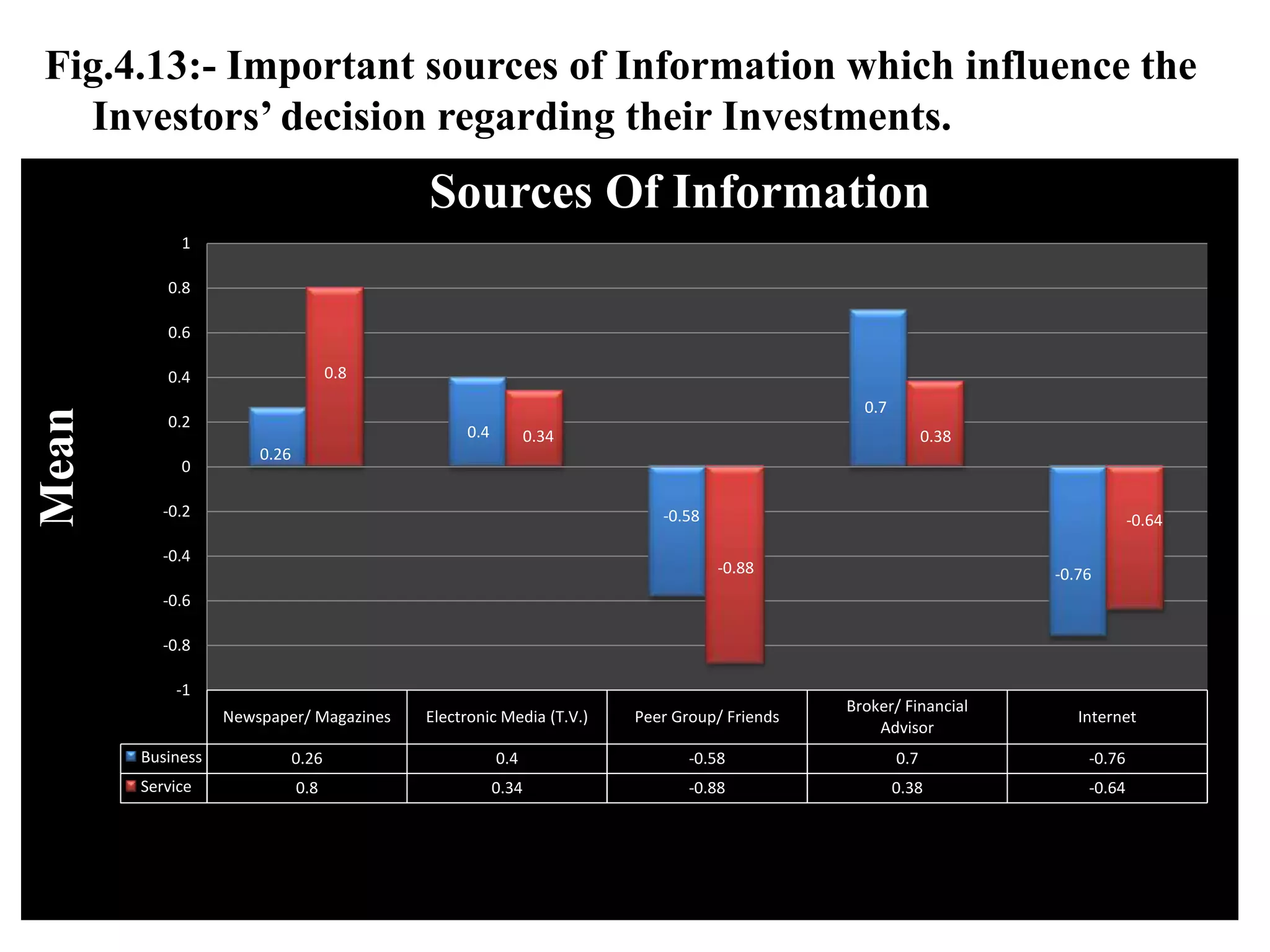
    By 1880s, thebank was acting as banker to Hong Kong Government.
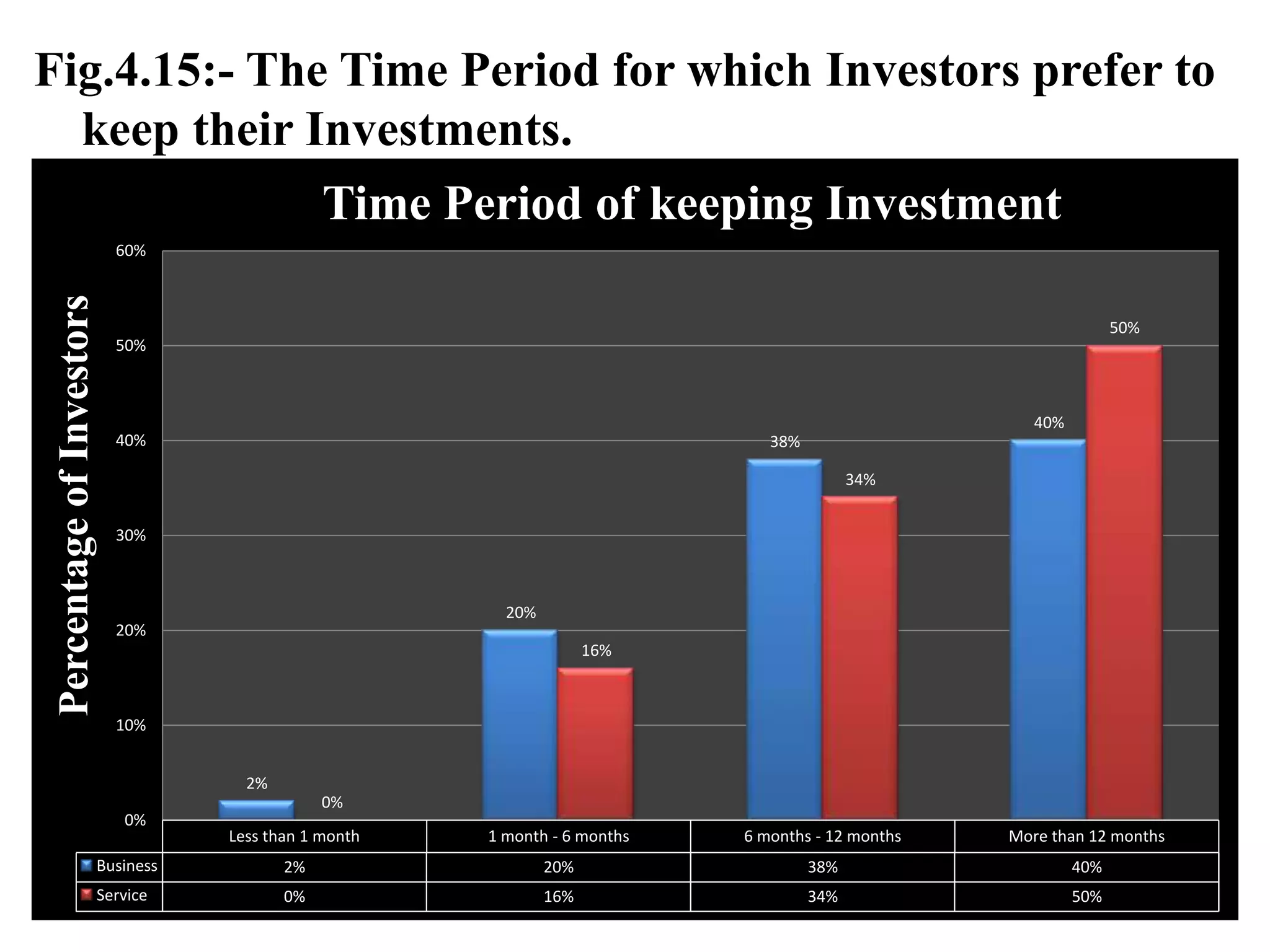
  • 5.
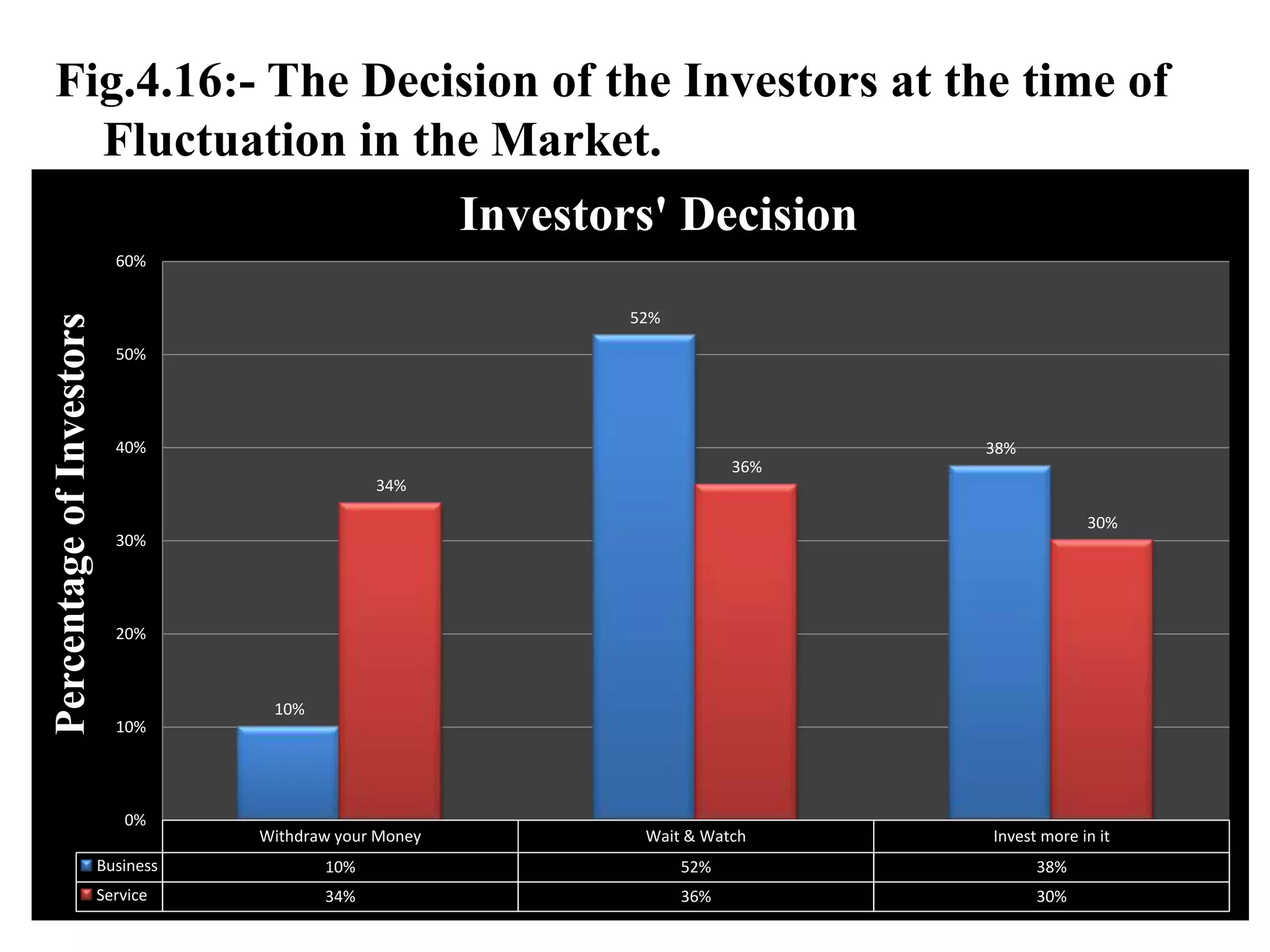
    It is alsoparticipated in the management of British government accounts in China, Japan, Penang & Singapore.Introduction to HSBCHSBC is world’s local bank.
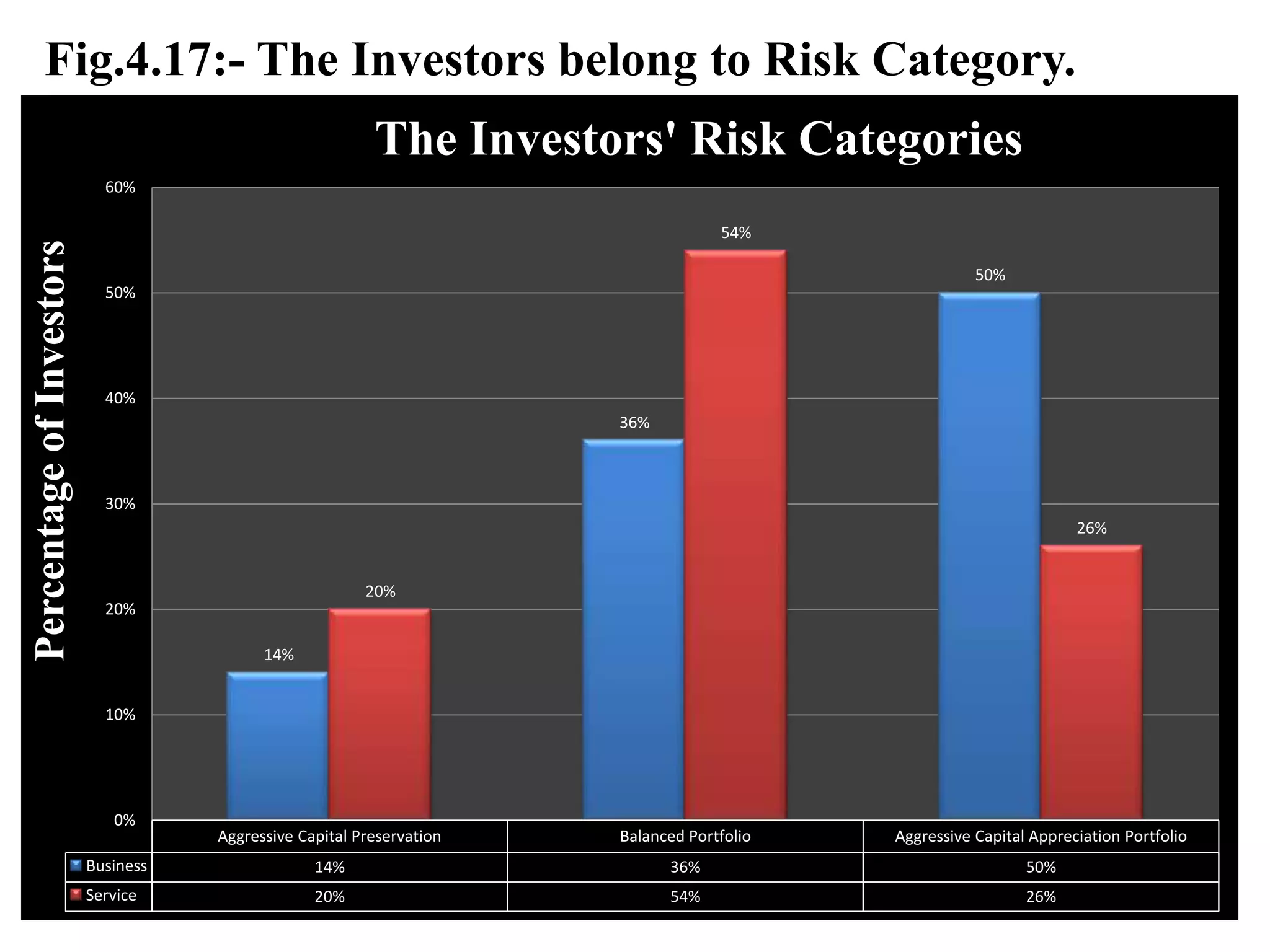
  • 6.
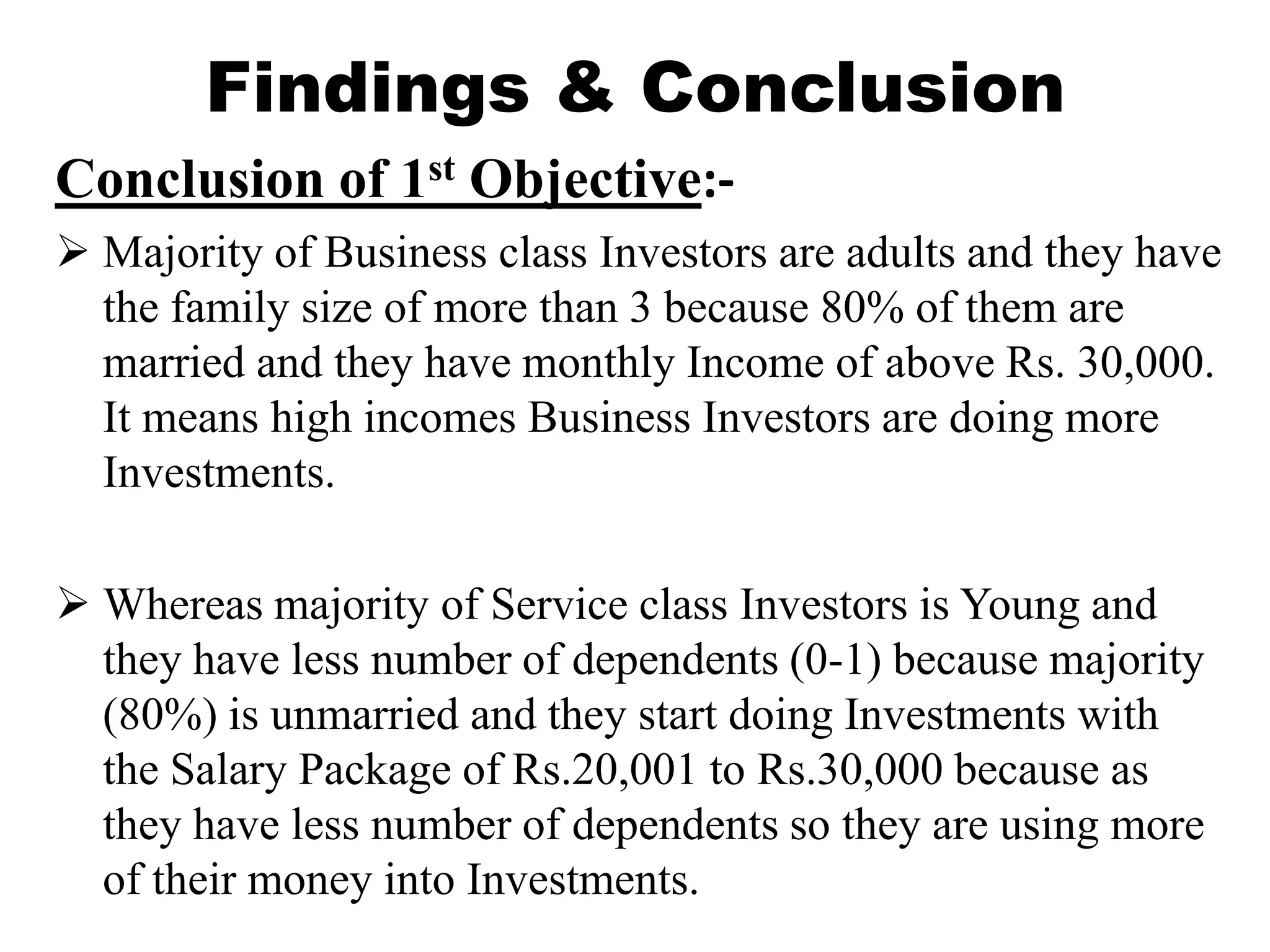
  • 7.
    HSBC’s international networkcomprises over 9500 offices in 76 countries & territories in Europe, the Asia-Pacific region, the Americas, the Middle East & Africa. HSBC provides a comprehensive range of financial services like- Personal financial servicesCommercial BankingCorporate BankingInvestment Banking 
  • 8.
    HSBC Group inIndiaIt offers a full range of Banking & Financial Services to its over 2.8 million customers.
  • 9.
    It has 47branches & 170 ATMs across 26 cities.
  • 10.
    It has over34,000 employees in its Banking, Investment Banking & Capital Markets.
  • 11.
    With Asset Management,2 Global IT development centres & 6 Global resourcing operations in the country.Sale of Stake in Investsmart to HSBCHSBC acquired 29.36% stake in IL&FS InvestSmart Ltd.
  • 12.
    HSBC acquired 43.85%of InvestSmart from E*TRADE Mauritius Ltd.
  • 13.
    HSBC hasaccepted shares to Public shareholders equivalent to 20.65% of InvestSmart’s capital.
  • 14.
    Thus, it hascompleted its acquisition of 93.86% of IL&FS for a consideration of US$296.4 million.Vision & Mission Vision :To become the preferred long term financial partner to a wide base of customers whilst optimizing stakeholders value.Mission: To establish a base of 1 million satisfied customers by 2010. We will create this by being a responsible and trustworthy partner.
  • 15.
    PRODUCT PROFILEAll theproducts of IL&FS can be broadly divided into the following two categories:Online Trading Products.
  • 16.
  • 17.
    Other services.Online TradingProduct of IL&FS InvestsmartBasically IL&FS Investsmart offers three types of products to its retail customers. Smart Start
  • 18.
  • 19.
    Smart TradeAdvisory ServicesMutualfund advisory services.Portfolio management services.IPO Advisory and Distribution Services.Insurance Advisory Services.Investment Advisory services
  • 20.
    Other ServicesOnline services.Researchand Financial Analysis.Value added services.
  • 21.
  • 22.
    Mr. AvdhootDeshpande Head - Equity and Capital Markets
  • 23.
    Mr. Vipul Shah Head - NBFC
  • 24.
    Mr. Dharmen shah Vice President - Institutional Equity
  • 25.
    Mr. JaideepAnand Senior Vice President - Institutional Sales & Dealing
  • 26.
    Mr. C. Diwakar Chief Information Officer
  • 27.
    Mr. K. Venkatesh Head – DistributionOrganization Chart
  • 28.
    SWOT ANALYSISStrengths:-Customization.Expertise.Unique Features.ResearchAgency.Extensive reach.Brand image.Competitive pricing.Weaknesses:-Expensive Products.Tedious Procedures.Fund Transfer.Attrition.
  • 29.
    Continued……….Opportunities:-Right Time toInvestors to re-enter into market.Huge untapped Markets.Increasing number of Graduates.Increase Tie-ups for Fund Transfer.Threats:-Stiff Competition.Increasing awareness of Mutual Funds & ULIPS.
  • 30.
  • 31.
  • 32.
  • 33.
  • 34.
  • 35.
    Investment PortfolioInvestmentis a commitment of funds made in the expectation of some positive rate of return.The Investment needs of an Investor:-Capital Preservation.Wealth Generation.Tax Savings.Income.Future Uncertainty.Retirement Planning.
  • 36.
    Investment PlanningIt helpsin deciding upon the right Investment strategy.It is a balance of three components:-Liquidity.Risk Tolerance.Return.
  • 37.
  • 38.
    Portfolio ManagementA Portfoliois a collection of securities that are grouped together to diversify the total Risk.
  • 39.
    An Optimal Portfolioprovides the highest possible utility, given the constraints imposed by the opportunity set and efficiency frontier.
  • 40.
    Beta measures therisk associated with Individual Portfolio in relation to the Market Portfolio.Meaning of Portfolio ManagementThe Art & Science of making decisions about Investment mix & policy, matching Investments to Objectives, asset allocation for Individuals & balancing risk vs. Performance.Portfolio Objectives:-Stability of Principal.Income.Growth of Income.Capital Appreciation.
  • 41.
  • 42.
    PMS by HSBCiPreserve:-Itis a discretionary investment management schemes, offering investment solutions in Mutual Funds that are aligned to suit investor’s financial goals.
  • 43.
    The Primary objectiveof iPreserve is to manage investments in Mutual Funds, encompassing both debt as well as equity schemes.
  • 44.
    It takes careof complete execution of the investment and monitoring on investor’s behalf.Continued…………iGrowth:-iGrowth is a discretionary portfolio management scheme focusing on investments in equities and derivatives with an objective of growth.
  • 45.
    It aims atcreating long-term wealth through judicious stock selection and asset allocation.Features of PMS by HSBCSmart Portfolio:-
  • 46.
  • 47.
    Scrip wise splitof Portfolio Holdings
  • 48.
  • 49.
    TitleA Comparative Analysison Investment Portfolio of Business & Service Class Investors of HSBC InvestDirect in Ludhiana.
  • 50.
    ObjectivesTo study thedemographical factors affected the choice of Portfolio of Investors.To identify the purpose of investment & extent of financial literacy of Investors.To know the most preferred Investment avenues of Investors.To find out the Risk Tolerance limit of Investors.
  • 51.
    Research MethodologyResearch Problem:-“A Comparative Analysis on Investment Portfolio of Business & Service Class Investors of HSBC Invest Direct in Ludhiana”.Research Design: -Descriptive Research Design.Data Collection: -Primary Research:- Questionnaires & Telephonic Interviews.
  • 52.
    Secondary Research: -Journals & Magazines.
  • 53.
    Sample:- The Business& Service class Investors of HSBC InvestDirect in Ludhiana.Sampling Unit:-Those Business & Service class Investors using PM Services of HSBC InvestDirect.Sample Size:- 100.50- Business Class Investors50- Service Class Investors.
  • 54.
    Sampling Frame:- Itincludes the Clients Database using PMS of HSBC InvestDirect, Ludhiana & the Walking Investors in Ludhiana Branch.
  • 55.
    Sampling Technique:- SimpleRandom Sampling & Convenience Sampling Techniques.Data Analysis & Interpretation
  • 56.
    Fig 4.1:- TheInvestors’ Demographic Profile (Gender)
  • 57.
    Fig.4.2:- The AgeGroup of Investors.
  • 58.
    Fig. 4.3:- TheMarital Status of Investors.
  • 59.
    Fig. 4.4:- TheInvestors are having Dependents.
  • 60.
    Fig.4.6:- Monthly Flowof Income of Investors.
  • 61.
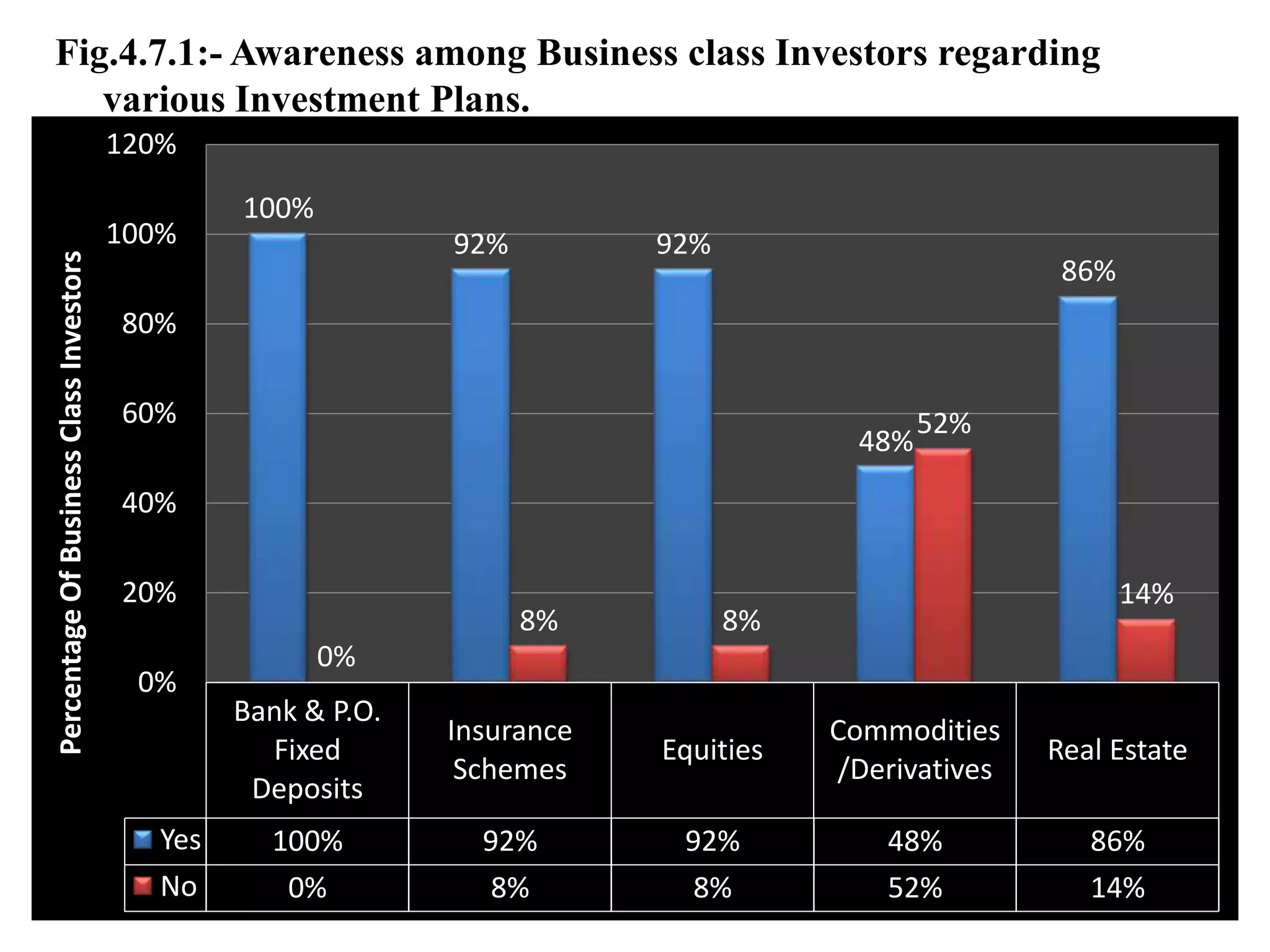
    Fig.4.7.1:- Awareness amongBusiness class Investors regarding various Investment Plans.
  • 62.
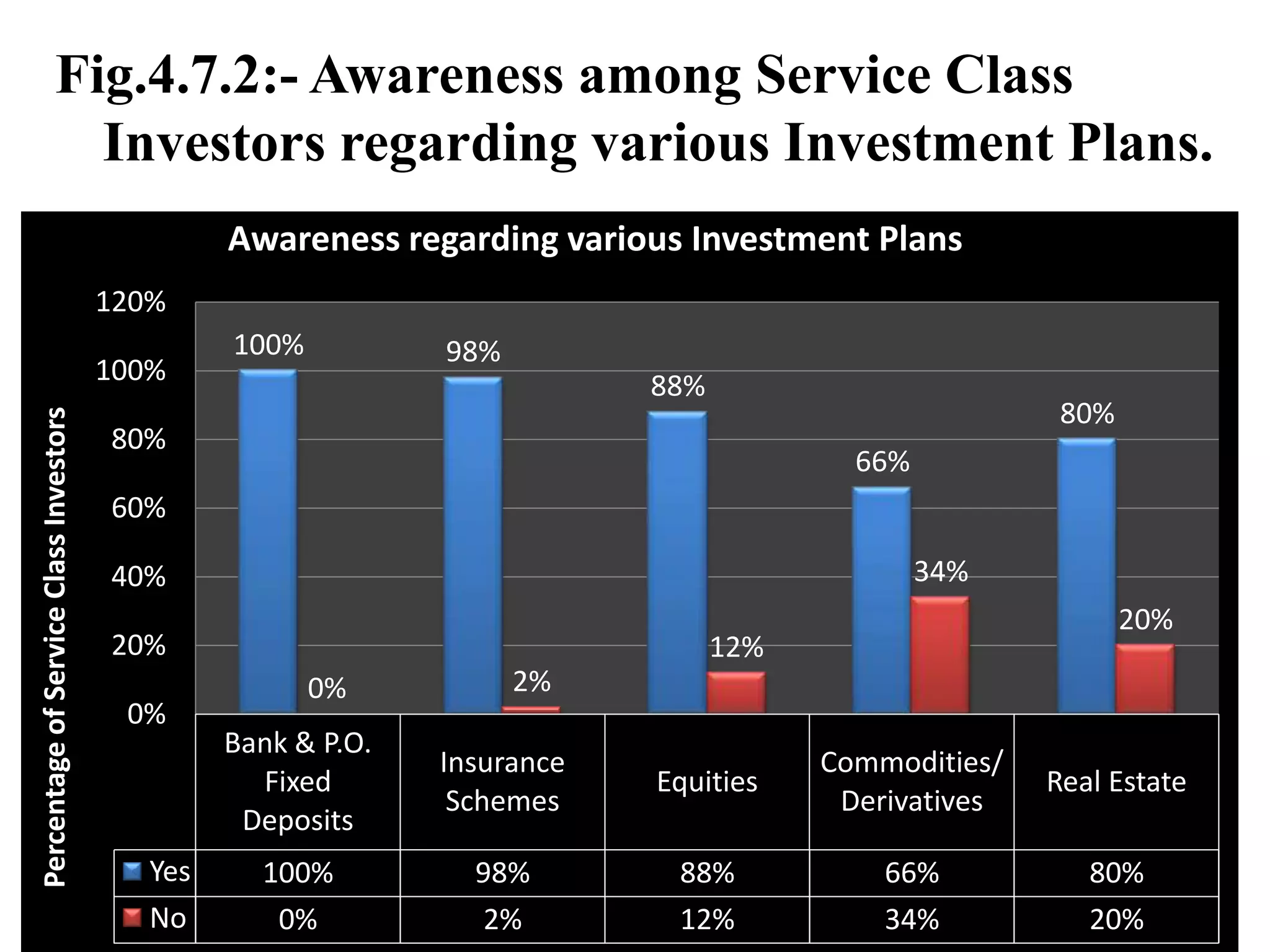
    Fig.4.7.2:- Awareness amongService Class Investors regarding various Investment Plans.
  • 63.
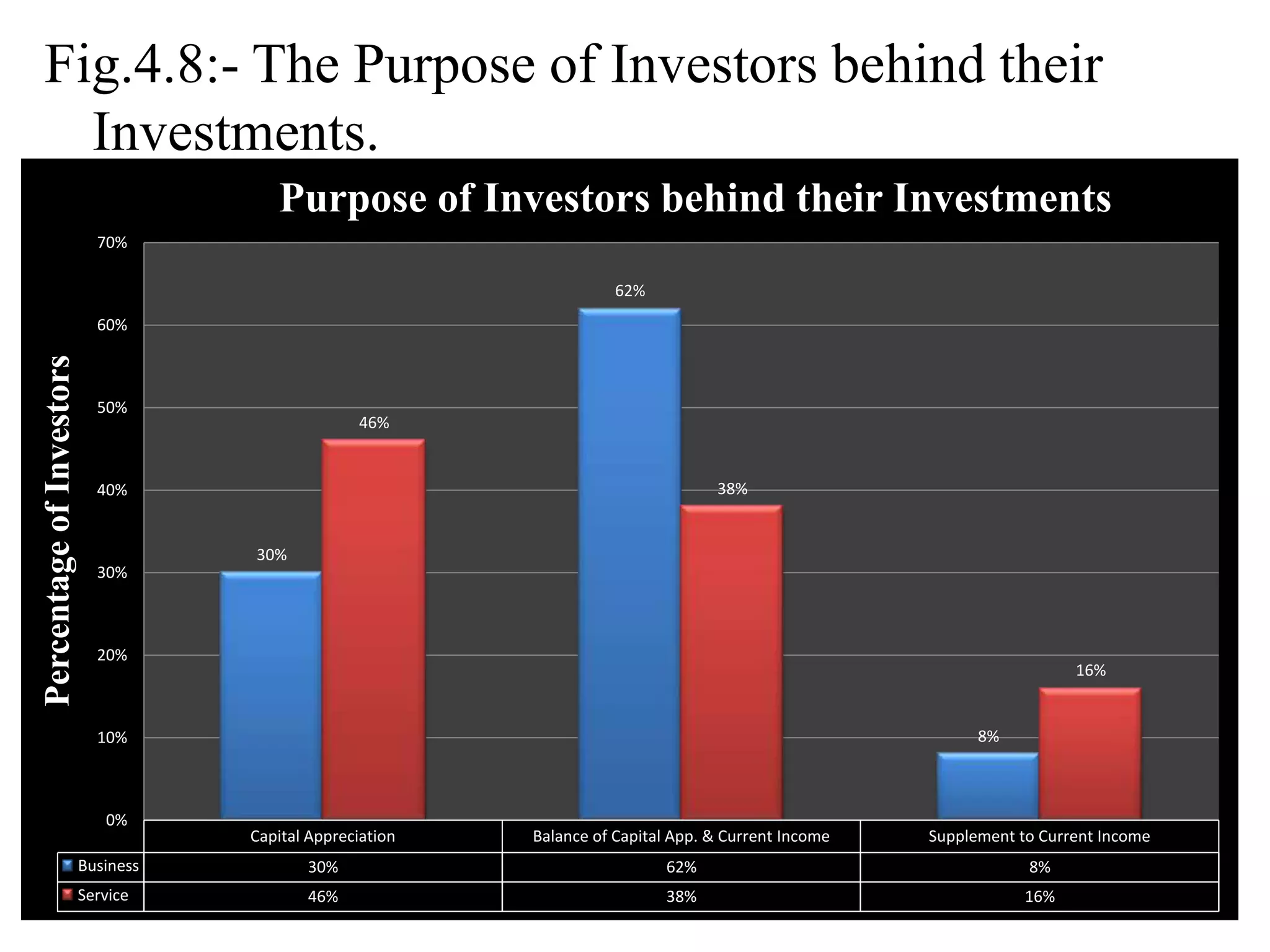
    Fig.4.8:- The Purposeof Investors behind their Investments.
  • 64.
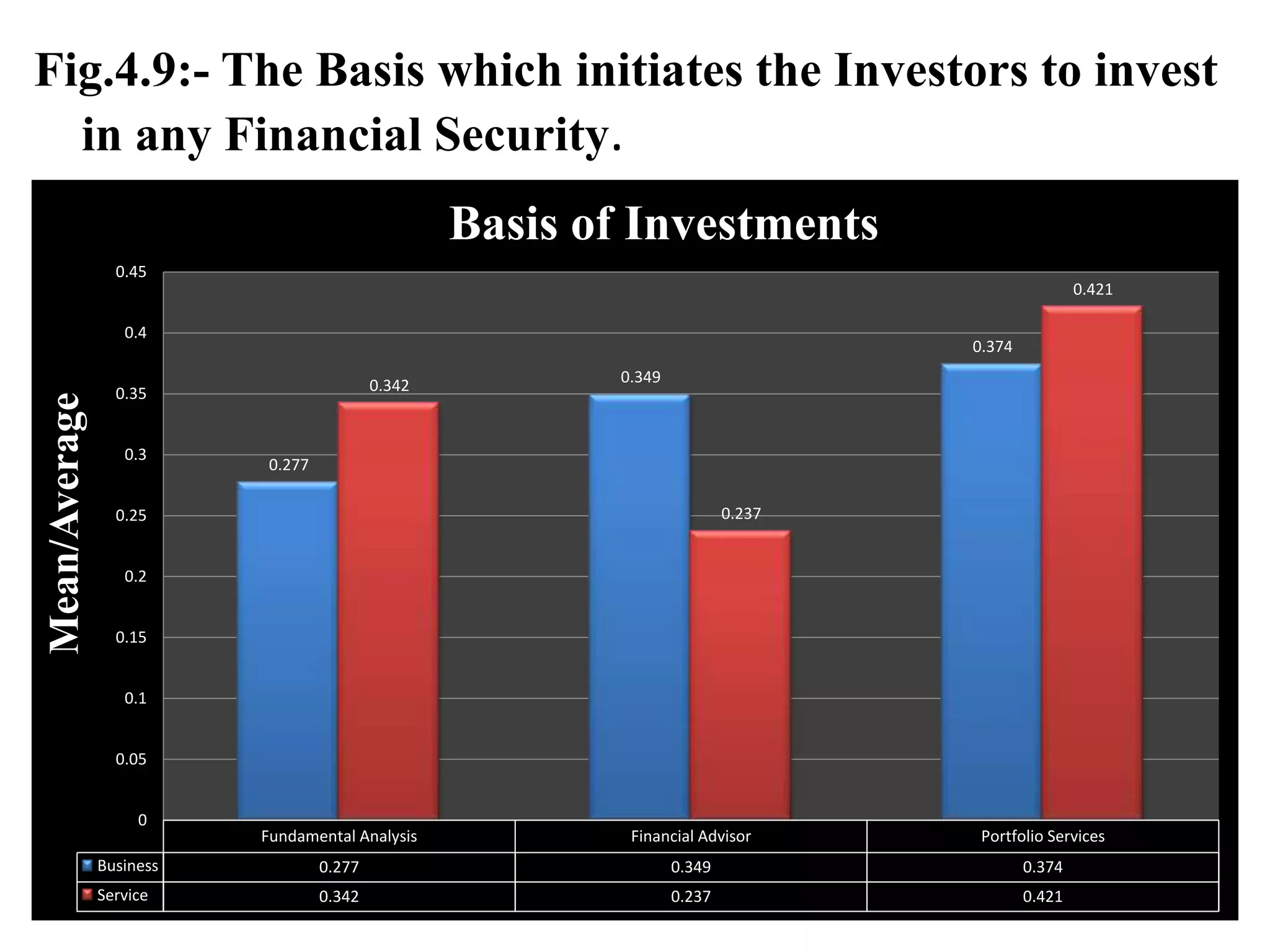
    Fig.4.9:- The Basiswhich initiates the Investors to invest in any Financial Security.
  • 65.
    Fig.4.10:- Important Featuresrequired in Investors’ Portfolio Plan.
  • 66.
    Fig.4.11:- Most PreferredInvestment Avenues by the Investors.
  • 67.
    Fig.4.12:- Type ofInvestments which are covered under their Current Portfolio.
  • 68.
    Fig.4.13:-Important sources ofInformation which influence the Investors’ decision regarding their Investments.
  • 69.
    Fig.4.15:- The TimePeriod for which Investors prefer to keep their Investments.
  • 70.
    Fig.4.16:- The Decisionof the Investors at the time of Fluctuation in the Market.
  • 71.
    Fig.4.17:- The Investorsbelong to Risk Category.
  • 72.
    Findings & ConclusionConclusionof 1st Objective:-Majority of Business class Investors are adults and they have the family size of more than 3 because 80% of them are married and they have monthly Income of above Rs. 30,000. It means high incomes Business Investors are doing more Investments.
  • 73.
    Whereas majority ofService class Investors is Young and they have less number of dependents (0-1) because majority (80%) is unmarried and they start doing Investments with the Salary Package of Rs.20,001 to Rs.30,000 because as they have less number of dependents so they are using more of their money into Investments.Conclusion of 2nd ObjectiveThe Business Investors have the awareness of all Investment avenues especially Equities & Real estate, few of them don’t know about Commodities/Derivatives & that’s why they do Investments with the purpose of appreciation in their Capital as well as a source of their current Income & whenever they do Investment in any security, they do so because their Portfolio Management Services & Financial Advisor initiate them to do so.
  • 74.
    Whereas Service classInvestors have the awareness of all Investment avenues especially Insurance schemes and Equities and very few of them don’t know about Derivatives. They do Investments with the purpose of Capital Appreciation & they do Investments by having Portfolio Services Initiation as well as Fundamental analysis of that particular Scrip/Company. 
  • 75.
    Conclusion of 3rdObjectiveBusiness class Investors have given the highest preference means Rank 1 to Equities.
  • 76.
    Whereas Service classInvestors have given the highest preference to Mutual Funds.Conclusion of 4th ObjectiveThe most preferred Investment Avenue for Business Investors is Equity & Real Estate and they keep it with themselves for more than 12 months because Equity is a long term Investment.
  • 77.
    They wait &watch or they invest more whenever they noticed any fluctuation in the market .
  • 78.
    That’s why theycome under Aggressive Capital Appreciation Category which refers to higher risk & higher returns.
  • 79.
    Whereas the Serviceclass Investors have most preferred Investment Avenue is Mutual Fund so they keep it for long period and most of them withdraw their Investment or they wait & watch when any fluctuation is noticed in the market.
  • 80.
    That’s why; theyhave a Balanced Portfolio which refers to moderate risk & moderate return.ConclusionBusiness Class Investors are more Risk taking. They prefer to invest in High risk Investments such as Equity & hold their securities for a longer period of time.
  • 81.
    They come underthe Aggressive Capital Appreciation Portfolio.
  • 82.
    Whereas; the ServiceClass Investors are less Risk taking.
  • 83.
    Whenever they noticedany fluctuation in the market they try to withdraw their money.
  • 84.
    They do SaferInvestments such as Mutual Fund and prefer to take moderate risk & moderate return. So, they come under a Balanced Portfolio. THANK YOU